April 9 Poet of the Day: Tracy K. Smith

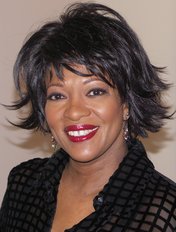
Tracy K. Smith is April 9 Poet of the Day.  Read more about this award winning poet below.

Tracy-K-Smith

Poets.org: http://www.poets.org/poetsorg/poet/tracy-k-smithhttp://www.poets.org/poetsorg/text/line-between-two-worlds-tracy-k-smith-and-elizabeth-alexander-conversation

NPR: http://www.npr.org/2012/01/27/145985904/newspoet-tracy-k-smith-writes-the-day-in-verse

Pulitzer: http://www.pulitzer.org/biography/2012-Poetry

PBS: http://video.pbs.org/video/1929273566/

Youtube video: “Imagining the Universe” https://www.youtube.com/watch?v=QW7WIJaSfl4, PEN World Festival: https://www.youtube.com/watch?v=CGEI9vWOGxs, “The Good Life” https://www.youtube.com/watch?v=BUn4DWu7b4U

April 8 Poet of the Day: Melvin B. Tolson

Melvin B. Tolson is April 8 Poet of the Day.  Read more about this poet, debtor, and politician below.

tolson

Poetry Foundation: http://www.poetryfoundation.org/bio/melvin-b-tolson

Modern American Poetry: http://www.english.illinois.edu/maps/poets/s_z/tolson/bio.htm

Black Past.org:  http://www.blackpast.org/aaw/tolson-melvin-b-1898-1966

NPR: http://www.npr.org/templates/story/story.php?storyId=17570617

Youtube videos: “Dark Symphony” https://www.youtube.com/watch?v=oHD0cpFAMpM, “An Ex-Judge at the Bar” https://www.youtube.com/watch?v=rAxGibPGtPc

A Song for Myself

By Melvin B. Tolson

                                                   I judge
                                               My soul
                                               Eagle
                                               Nor mole:
                                               A man
                                               Is what
                                               He saves
                                               From rot.
                                               The corn
                                               Will fat
                                               A hog
                                               Or rat:
                                               Are these
                                               Dry bones
                                               A hut’s
                                               Or throne’s?
                                               Who filled
                                               The moat
                                               ’Twixt sheep
                                               And goat?
                                               Let Death,
                                               The twin
                                               of Life,
                                               Slip in?
                                               Prophets
                                               Arise,
                                               Mask-hid,
                                               Unwise,
                                               Divide
                                               The earth
                                               By class
                                               and birth.
                                               Caesars
                                               Without,
                                               The People
                                               Shall rout;
                                               Caesars
                                               Within,
                                               Crush flat
                                               As tin.
                                               Who makes
                                               A noose
                                               Envies
                                               The goose.
                                               Who digs
                                               A pit
                                               Dices
                                               For it.
                                               Shall tears
                                               Be shed
                                               For those
                                               Whose bread
                                               Is thieved
                                               Headlong?
                                               Tears right
                                               No wrong.
                                               Prophets
                                               Shall teach
                                               The meek
                                               To reach.
                                               Leave not
                                               To God
                                               The boot
                                               And rod.
                                               The straight
                                               Lines curve?
                                               Failure
                                               Of nerve?
                                               Blind-spots
                                               Assail?
                                               Times have
                                               Their Braille.
                                               If hue
                                               Of skin
                                               Trademark
                                               A sin,
                                               Blame not
                                               The make
                                               For God’s
                                               Mistake.
                                               Since flesh
                                               And bone
                                               Turn dust
                                               And stone,
                                               With life
                                               So brief,
                                               Why add
                                               To grief?
                                               I sift
                                               The chaff
                                               From wheat
                                               and laugh.
                                               No curse
                                               Can stop
                                               The tick
                                               Of clock.
                                               Those who
                                               Wall in
                                               Themselves
                                               And grin
                                               Commit
                                               Incest
                                               And spawn
                                               A pest.
                                               What’s writ
                                               In vice
                                               Is writ
                                               In ice.
                                               The truth
                                               Is not
                                               Of fruits
                                               That rot.
                                               A sponge,
                                               The mind
                                               Soaks in
                                               The kind
                                               Of stuff
                                               That fate’s
                                               Milieu
                                               Dictates.
                                               Jesus,
                                               Mozart,
                                               Shakespeare,
                                               Descartes,
                                               Lenin,
                                               Chladni,
                                               Have lodged
                                               With me.
                                               I snatch
                                               From hooks
                                               The meat
                                               Of books.
                                               I seek
                                               Frontiers,
                                               Not worlds
                                               On biers.
                                               The snake
                                               Entoils
                                               The pig
                                               With coils.
                                               The pig’s
                                               Skewed wail
                                               Does not
                                               Prevail.
                                               Old men
                                               Grow worse
                                               With prayer
                                               Or curse:
                                               Their staffs
                                               Thwack youth
                                               Starved thin
                                               For truth.
                                               Today
                                               The Few
                                               Yield poets
                                               Their due;
                                               Tomorrow
                                               The Mass
                                               Judgment
                                               Shall pass.
                                               I harbor
                                               One fear
                                               If death
                                               Crouch near:
                                               Does my
                                               Creed span
                                               The Gulf
                                               Of Man?
                                               And when
                                               I go
                                               In calm
                                               Or blow
                                               From mice
                                               And men,
                                               Selah!
                                               What . . . then?

Melvin Tolson, “A Song for Myself” from Harlem Gallery and Other Poems of Melvin B. Tolson (Charlottesville: The University Press of Virginia, 1999)

Source: “Harlem Gallery” and Other Poems of Melvin B. Tolson (University Press of Virginia, 1999)

April 7 Poet of the Day: Rita Dove

US Poet Laureate Rita Dove is April 7 Poet of the Day.  Read more about this talented poet below.

rita dove 2010

Poets.org: http://www.poets.org/poetsorg/poet/rita-dove

Poetry Foundation: http://www.poetryfoundation.org/bio/rita-dove

Academy of Achievement: http://www.achievement.org/autodoc/page/dov0bio-1

Poetry Archive: http://www.poetryarchive.org/poet/rita-dove

Biography: http://www.biography.com/people/rita-dove-9278390

Library of Congress Web Guides: http://www.loc.gov/rr/program/bib/dove/

Poem:

Vacation

Rita Dove, 1952
I love the hour before takeoff,
that stretch of no time, no home
but the gray vinyl seats linked like
unfolding paper dolls. Soon we shall
be summoned to the gate, soon enough
there’ll be the clumsy procedure of row numbers
and perforated stubs—but for now
I can look at these ragtag nuclear families
with their cooing and bickering
or the heeled bachelorette trying
to ignore a baby’s wail and the baby’s
exhausted mother waiting to be called up early
while the athlete, one monstrous hand
asleep on his duffel bag, listens,
perched like a seal trained for the plunge.
Even the lone executive
who has wandered this far into summer
with his lasered itinerary, briefcase
knocking his knees—even he
has worked for the pleasure of bearing
no more than a scrap of himself
into this hall. He’ll dine out, she’ll sleep late,
they’ll let the sun burn them happy all morning
—a little hope, a little whimsy
before the loudspeaker blurts
and we leap up to become
Flight 828, now boarding at Gate 17.

Reprinted from On the Wing, published by the University of Iowa Press.

Youtube videos: White House Poetry Evening: https://www.youtube.com/watch?v=NIT82Oy9U1Y, “Thomas and Beulah”: https://www.youtube.com/watch?v=7duHFUjieME, Big Think Interview: https://www.youtube.com/watch?v=CwdMXj2p1TQ

April 9 Jazz Artist of the Day: Stanley Turrentine

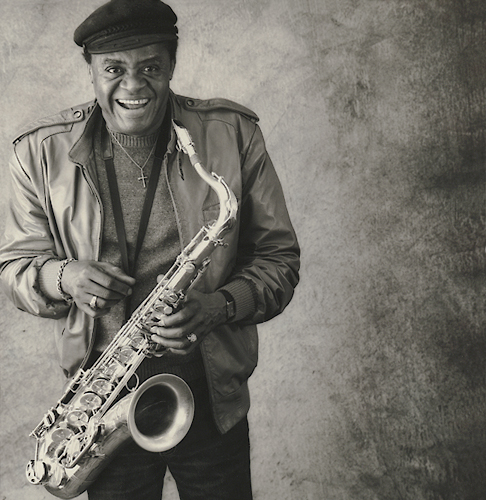
Stanley Turrentine, jazz saxophonist, is April 9 Jazz Artist of the Day.  Read more about this talented jazz artist below.

turrentine21

All Music: http://www.allmusic.com/artist/stanley-turrentine-mn0000012644

NPR: http://www.npr.org/2008/09/10/94436220/stanley-turrentine-saxophone-sugar-man

Jazz Encyclopedia: http://www.jazz.com/encyclopedia/turrentine-stanley

Youtube videos: “Sugar” https://www.youtube.com/watch?v=oLaIrVB1av4, “Don’t Mess With Mr. T” https://www.youtube.com/watch?v=l4SF4gXlhWI

April 8 Jazz Artist of the Day: Melba Liston

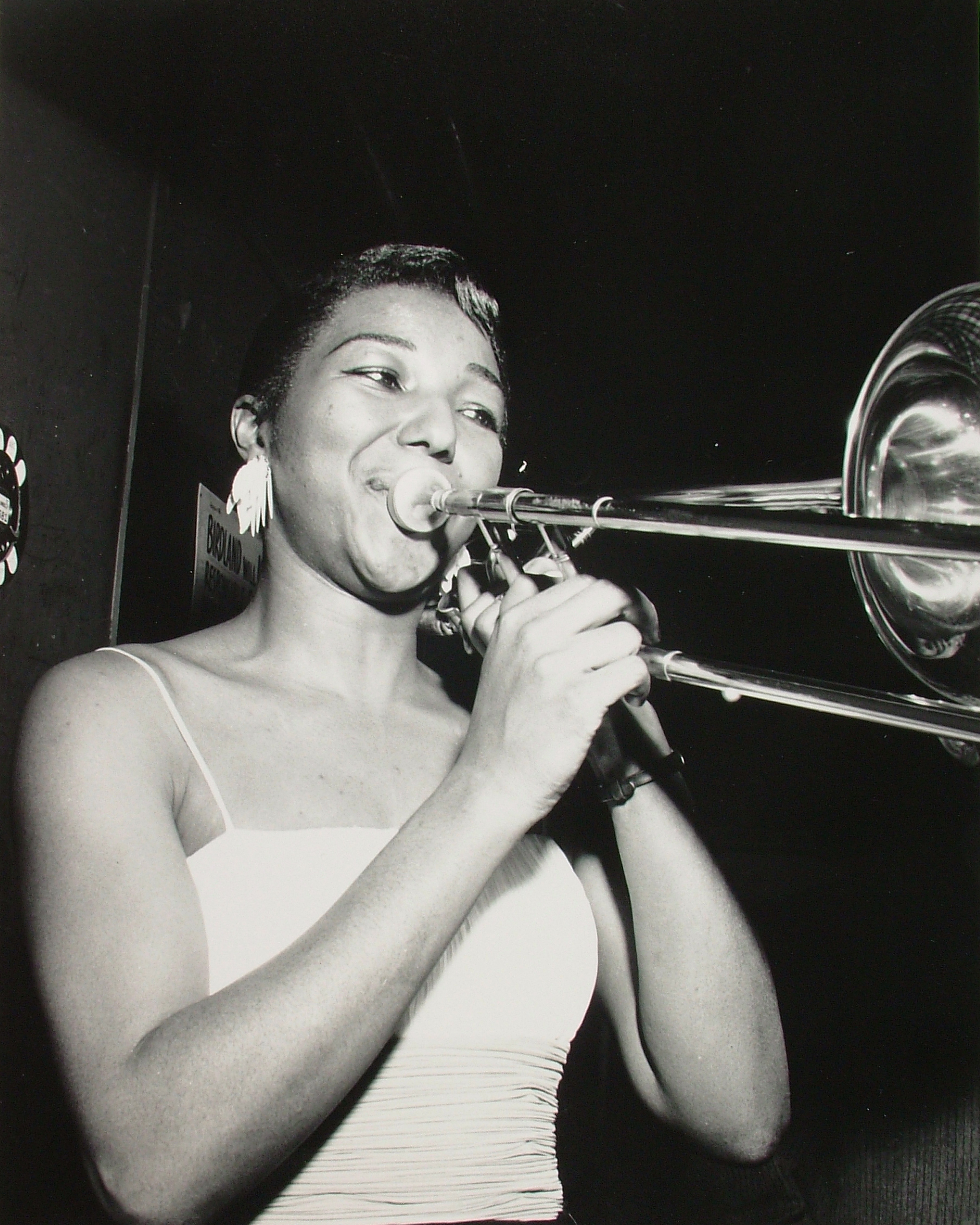
Melba Liston, a jazz trombonist, is April 8 Jazz Artist of the Day.  Read more about this pioneer jazz artist below.

Melba-Liston1

All Music: http://www.allmusic.com/artist/melba-liston-mn0000404399/biography

NPR: http://www.npr.org/2008/07/09/92349036/melba-liston-bones-of-an-arranger

NEA Jazz Masters: http://arts.gov/honors/jazz/melba-liston

Youtube videos: “Insomnia” https://www.youtube.com/watch?v=4qwFmRzEbcM, “Blues Melba” https://www.youtube.com/watch?v=c4rJtLR1ZoQ

April 7 Jazz Artist of the Day: Freddie Hubbard

Freddie Hubbard, who was also born on this day, is the Jazz Artist of the Day.  Read more about this legendary trumpeter below.

freddiehubbard

All Music: http://www.allmusic.com/artist/freddie-hubbard-mn0000798326

NPR: http://www.npr.org/templates/story/story.php?storyId=99175115

Obituaries: http://www.independent.co.uk/news/obituaries/freddie-hubbard-virtuoso-jazz-trumpeter-who-played-with-john-coltrane-art-blakey-and-herbie-hancock-during-a-50year-career-1218141.htmlhttp://www.npr.org/templates/story/story.php?storyId=1127264

Youtube videos: “Little Sunflower” https://www.youtube.com/watch?v=OtB8dEuEmNM, “Red Clay” https://www.youtube.com/watch?v=wA1ZelIbUfI, “First Light” https://www.youtube.com/watch?v=7zh0-T0efTY

April 9 African American Historical Events

* Today in Black History – April 9 *

1816 – The African Methodist Episcopal Church is organized at a
general convention in Philadelphia, Pennsylvania.

1865 – Nine African American regiments of Gen. John Hawkins’s
division help to smash the Confederate defenses at Fort
Blakely, Alabama. Capture of the fort will lead to the
fall of Mobile. The 68th U.S. Colored Troops will have
the highest number of casualties in the engagement.

1865 – Robert E. Lee surrenders Army of Northern Virginia to
Grant at Appomattox Court House, Virginia, ending the
Civil War.
AFRICAN AMERICANS IN THE CONFEDERACY: The Confederacy is
the first to recognize that African Americans are major
factors in the war. The South impresses slaves to work
in mines, repair railroads and build fortifications,
thereby releasing a disproportionately large percentage
of able-bodied whites for direct war service. A handful
of African Americans enlisted in the rebel army, but few,
if any, fired guns in anger. A regiment of fourteen
hundred free African Americans received official
recognition in New Orleans, but was not called into
service. It later became, by a strange mutation of
history, the first African American regiment officially
recognized by the Union army.
AFRICAN AMERICANS IN THE UNION NAVY: One out of every
four Union sailors was an African American. Of the
118,044 sailors in the Union Navy, 29,511 were African
Americans. At least four African American sailors won
Congressional Medals of Honor.
AFRICAN AMERICANS IN THE UNION ARMY: The 185,000 Black
soldiers in the Union army were organized into 166 all
Black regiments (145 infantry, 7 cavalry, 12 heavy
artillery, 1 light artillery, 1 engineer). The largest
number of African American soldiers came from Louisiana
(24,052), followed by Kentucky (23,703) and Tennessee
(20,133). Pennsylvania contributed more African
American soldiers than any other Northern state (8,612).
African American soldiers participated in 449 battles,
39 of them major engagements. Sixteen Black soldiers
received Congressional Medals of Honor for gallantry in
action. Some 37,638 African American soldiers lost
their lives during the war. African American soldiers
generally received poor equipment and were forced to do
a large amount of fatigue duty. Until 1864, African
American soldiers (from private to chaplain) received
seven dollars a month whereas white soldiers received
from thirteen to one hundred dollars a month. In 1863
African American units, with four exceptions (Fifth
Massachusetts Cavalry, Fifty-fourth and Fifty-fifth
Massachusetts Volunteers and Twenty-ninth Connecticut
Volunteers), were officially designated United States
Colored Troops (USCT). Since the War Department
discouraged applications from African Americans, there
were few commissioned officers. The highest ranking of
the seventy-five to one hundred African American
officers was Lt. Col. Alexander T. Augustana, a surgeon.
Some 200,000 African American civilians were employed
by the Union army as laborers, cooks, teamsters and
servants.

1866 – The Civil Rights Bill of 1866 is passed over the
president’s veto. The bill will confer citizenship on
African Americans and give them “the same right, in
every State and Territory… as is enjoyed by white
citizens.”

1870 – The American Anti-Slavery Society is dissolved.

1898 – Paul Leroy Robeson is born in Princeton, New Jersey. The
son of an ex-slave turned Methodist minister, Robeson
will attend Rutgers University on a full scholarship,
where he will excel and obtain 12 letters in four sports,
be named to the All-American football team twice, be a
member of the debate team, and earn a Phi Beta Kappa key.
He will study law at Columbia University in New York and
receive his degree in 1923. There he will meet and marry
Eslanda Cardozo Goode, who will be the first African
American woman to head a pathology laboratory. He will
work as a law clerk in New York, but once again will
face discrimination and leave the practice when a white
secretary refuses to take dictation from him. He will
later become one of America’s foremost actors and singers.
He will make 14 films including “The Emperor Jones,”
“King Solomon’s Mines,” and “Showboat.” During the 1940’s
he will continue to have success on the stage, in film,
and in concert halls, but will remain face to face with
prejudice and racism. After finding the Soviet Union
to be a tolerant and friendly nation, he will begin to
protest the growing Cold War hostilities between the
United States and the USSR. He will question why
African Americans should support a government that did
not treat them as equals. At a time when dissent was
hardly tolerated, Robeson will be looked upon as an
enemy by his government. In 1947, he will be named by
the House Committee on Un-American Activities, and the
State Department will deny him a passport until 1958.
Events such as these, along with a negative public
response, will lead to the demise of his public career.
He will be an inspiration to millions around the world.
His courageous stance against oppression and inequality
in part will lead to the civil rights movement of the
1960s. He will join the ancestors on January 23, 1976,
in Philadelphia, Pennsylvania after living in seclusion
for ten years.

1929 – Valenza Pauline Burke is born in Brooklyn, New York to
parents who had immigrated to the United States from
Barbados. She will become a novelist known as Paule
Marshall. She will author “Browngirl, Brownstones,”
“Praisesong for the Widow,” “The Chosen Place, The
Timeless People,” “Soul Clap Hands and Sing,” and
Daughters.” She will also write a collection of short
stories, “Reena and Other Stories.”

1939 – When she is refused admission to the Daughters of the
American Revolution’s Constitution Hall to give a
planned concert, Marian Anderson performs for 75,000 on
the steps of the Lincoln Memorial. Two months later, she
will be honored with the NAACP’s Spingarn Medal for her
talents as “one of the greatest singers of our time”
and for “her magnificent dignity as a human being.”

1950 – Juanita Hall becomes the first African American to win a
Tony award for her role as Bloody Mary in the musical
“South Pacific.”

1968 – Martin Luther King Jr. is buried after funeral services
at Ebenezer Baptist Church and memorial services at
Morehouse College, in Atlanta, Georgia. More than
300,000 persons march behind the coffin of the slain
leader which is carried through the streets of Atlanta
on a farm wagon pulled by two Georgia mules. Scores of
national dignitaries, including Vice-President Hubert
Humphrey, attend the funeral. CORE and the Fellowship of
Reconciliation send twenty-three dignitaries. Ralph
David Abernathy is elected to succeed King as head of
the Southern Christian Leadership Conference.

1993 – The Reverend Benjamin Chavis is chosen to head the NAACP,
succeeding Benjamin Hooks.

Information retrieved from the Munirah Chronicle and is edited by Mr. Rene’ A. Perry.

April 8 African American Historical Events

* Today in Black History – April 8 *

1922 – Carmen McRae is born in the village of Harlem in New York
City. She will study classical piano in her youth, even
though singing was her first love. She will win an
amateur contest at the Apollo Theater and begin her
singing career. She will be influenced by Billie
Holiday, who will become a lifelong friend and mentor.
She will devote her albums and the majority of her
nightclub acts to Lady Day’s memory. Her association
with jazz accordionist Matt Mathews will lead to her
first solo recordings in 1953-1954. In her later years,
McRae’s original style will influence singers Betty
Carter and Carol Sloane. Her best known recordings will
be “Skyliner” (1956) and “Take Five” with Dave Brubeck
(1961). She will also work in films and will appear in
“Hotel” (1967) and “Jo Jo Dancer Your Life is Calling”
(1986). She will receive six Grammy award nominations
and the National Endowment for the Arts’ National Jazz
Masters Fellowship Award in 1994. She will join the
ancestors on November 10, 1994.

1938 – Cornetist and bandleader Joe “King” Oliver joins the
ancestors in Savannah, Georgia. He was considered one
of the leading musicians of New Orleans-style jazz and
served as a mentor to Louis Armstrong, who played with
him in 1922 and 1923.

1953 – Louis “Sweet Lou” Dunbar is born in Houston, Texas. He will
become a professional basketball player (for 27 years) with
the Harlem Globetrotters. After his playing days, he will
become the Director of Player Personnel. He will be the 25th
person to receive the Globetrotter “Legends” Distinction,
awarded on February 9, 2007 at Houston’s Toyota Center. He
will also become a member of the National Basketball Retired
Players Association (Legends of Basketball).

1974 – Hank Aaron of the Atlanta Braves hits his 715th home run
against a pitch thrown by Los Angeles Dodger Al Downing
at a home game in Fulton County Stadium. Aaron’s home
run breaks the long-standing home run record of Babe
Ruth.

1975 – Frank Robinson, major league baseball’s first African
American manager, gets off to a winning start as his
team, the Cleveland Indians, defeat the New York
Yankees, 5-3.

1980 – State troopers are mobilized to stop racially motivated
civil disturbances in Wrightsville, Georgia. Racial
incidents are also reported in Chattanooga, Tennessee,
Oceanside, California, Kokomo, Indiana, Wichita, Kansas,
and Johnston County, North Carolina.

1987 – Los Angeles Dodgers general manager Al Campanis is fired
for alleged racially biased comments about the
managerial potential of African Americans.

1990 – Percy Julian, who helped create drugs to combat glaucoma
and methods to mass produce cortisone, and agricultural
scientist George Washington Carver are the first African
American inventors admitted into the National Inventors
Hall of Fame in the hall’s 17-year history.

1992 – Tennis great Arthur Ashe announces at a New York news
conference that he has AIDS. He contracted the virus
from a transfusion needed for an earlier heart surgery.
He will join the ancestors on February 6, 1993 of
AIDS-related pneumonia at age 49.

2001 – Tiger Woods becomes the first golfer to hold all four
major professional golf titles at one time when he wins
the 2001 Masters tournament.

Information retrieved from the Munirah Chronicle and is edited by Mr. Rene’ A. Perry.
April 7 African American Historical Events

* Today in Black History – April 7 *

1712 – A slave uprising in New York City results in the death of
nine whites. This is one of the first major revolt of
African slaves in the American colonies. After the
militia arrives, the uprising will be suppressed. As a
result of the action, twenty one slaves will be executed
and six others will commit suicide.

1867 – Johnson C. Smith University is founded in Charlotte, North
Carolina.

1872 – William Monroe Trotter is born near Chillicothe, Ohio. He will
become a newspaper editor and real estate businessman based
in Boston, Massachusetts, and an activist for African
American civil rights. He will be an early opponent of the
accommodationist race policies of Booker T. Washington, and
in 1901, will found the Boston Guardian, an independent
African American newspaper, as a vehicle to express that
opposition. Active in protest movements for civil rights
throughout the 1900s and 1910s, he will also reveal some of
the differences within the African American community. He
will contribute to the formation of the National Association
for the Advancement of Colored People (NAACP). He will earn
his undergraduate and graduate degrees at Harvard University,
and will become the first man of color to earn a Phi Beta
Kappa key there. Seeing an increase in segregation in northern
facilities, he will begin to engage in a life of activism, to
which he will devote his assets. He will join with W.E.B. Du
Bois in founding the Niagara Movement in 1905, a forerunner of
the NAACP. His style will be often divisive, and he will end
up leaving that organization and founding the National Equal
Rights League. His protest activities will sometimes seen to
be at odds with the goals of the NAACP. In 1914, he will have
a highly publicized meeting with President Woodrow Wilson, in
which he will protest Wilson’s introduction of segregation
into the federal workplace. In Boston, he will succeed in 1910,
in shutting down productions of The Clansman, but will be
unsuccessful in 1915 with preventing screenings of the movie
“Birth of a Nation,” which also portrayed the Ku Klux Klan in
favorable terms. He will not be able to influence the peace
talks at the end of World War I, and in later years become a
marginalized voice of protest. In an alliance with Roman
Catholics in 1921, he will get a revival screening of “Birth
of a Nation” banned. He will join the ancestors died on his
62nd birthday, April 7, 1934.

1915 – Eleanora Fagan is born in Philadelphia, Pennsylvania. She will
become a jazz singer who will influence the course of
American popular singing, better known as Billie Holiday or
“Lady Day.” She will be best known for her songs, “Strange
Fruit,” “Lover Man,” and “God Bless the Child.” Although she
will enjoy limited popular appeal during her lifetime, her
impact on other singers will be profound. Troubled in life
by addiction, She will join the ancestors as a result of
drug and alcohol abuse on July 17,1959.

1922 – Ramon “Mongo” Santamaria is born in Havana, Cuba. He will
drop out of school to become a professional musician,
playing gigs at the legendary Tropicana Club in Havana. In
1950 Santamaria will move to New York, where he will hook
up with such Latin jazz greats as Perez Prado, Tito Puente
and Cal Tjader. In 1963 Santamaria will score his first Top
10 hit with the single “Watermelon Man,” written by then
bandmate Herbie Hancock. Santamaria will perform and record
steadily throughout the ’60s, ’70s, ’80s and ’90s. In 1977,
he will be awarded a Grammy for his album “Amancer.” In
1999 Rhino Records will release a double-CD retrospective
of Santamaria’s music, The Mongo Santamaria Anthology
1958-1995, culling his greatest work during those five
decades. He will be considered one of the most influential
percussionists of his generation. He will join the ancestors
in Miami, Florida on February 1, 2003.

1934 – William Monroe Trotter joins the ancestors in Boston,
Massachusetts at the age of sixty-two.

1938 – Trumpeter Frederick Dewayne “Freddie” Hubbard is born in
Indianapolis, Indiana. From a musical family, he will play
four instruments in his youth and will later play with “Slide”
Hampton, Quincy Jones, and Art Blakey. A leader of his own
band starting in the 1960’s, he will record the noteworthy
albums “Red Clay,” “First Light,” and the Grammy Award-winning
“Straight Life.” He will join the ancestors on
December 29, 2008.

1940 – The first U.S. stamp ever to honor an African American is
issued bearing the likeness of Booker T. Washington. His
likeness is on a 10-cent stamp.

1954 – Tony Dorsett is born in Rochester, Pennsylvania. He will
become a star football player at the University of
Pittsburgh, where he will win the Heisman Trophy in 1976.
He will then become the number one pick in the 1977 NFL
draft by the Dallas Cowboys. He will play in two Super Bowls,
five NFC championship games, four Pro Bowls, will be All-NFL
in 1981, and NFC rushing champion in 1982. His career totals
include 12,739 yards rushing, 398 receptions for 3,544 yards,
16,326 combined net yards, 90 touchdowns, and a record 99
yard run for a touchdown against the Minnesota Vikings in
1983. He will end his career with the 1988 Denver Broncos.
He will be enshrined in the NFL Hall of Fame in 1994.

1994 – Civil war erupts in Rwanda, a day after a mysterious plane
crash claims the lives of the presidents of Rwanda and
Burundi. In the months that follow, hundreds of thousands of
minority Tutsi and Hutu intellectuals will be slaughtered.

Information retrieved from the Munirah Chronicle and is edited by Mr. Rene’ A. Perry.