April 8 African American Historical Events

* Today in Black History – April 8 *

1922 – Carmen McRae is born in the village of Harlem in New York
City. She will study classical piano in her youth, even
though singing was her first love. She will win an
amateur contest at the Apollo Theater and begin her
singing career. She will be influenced by Billie
Holiday, who will become a lifelong friend and mentor.
She will devote her albums and the majority of her
nightclub acts to Lady Day’s memory. Her association
with jazz accordionist Matt Mathews will lead to her
first solo recordings in 1953-1954. In her later years,
McRae’s original style will influence singers Betty
Carter and Carol Sloane. Her best known recordings will
be “Skyliner” (1956) and “Take Five” with Dave Brubeck
(1961). She will also work in films and will appear in
“Hotel” (1967) and “Jo Jo Dancer Your Life is Calling”
(1986). She will receive six Grammy award nominations
and the National Endowment for the Arts’ National Jazz
Masters Fellowship Award in 1994. She will join the
ancestors on November 10, 1994.

1938 – Cornetist and bandleader Joe “King” Oliver joins the
ancestors in Savannah, Georgia. He was considered one
of the leading musicians of New Orleans-style jazz and
served as a mentor to Louis Armstrong, who played with
him in 1922 and 1923.

1953 – Louis “Sweet Lou” Dunbar is born in Houston, Texas. He will
become a professional basketball player (for 27 years) with
the Harlem Globetrotters. After his playing days, he will
become the Director of Player Personnel. He will be the 25th
person to receive the Globetrotter “Legends” Distinction,
awarded on February 9, 2007 at Houston’s Toyota Center. He
will also become a member of the National Basketball Retired
Players Association (Legends of Basketball).

1974 – Hank Aaron of the Atlanta Braves hits his 715th home run
against a pitch thrown by Los Angeles Dodger Al Downing
at a home game in Fulton County Stadium. Aaron’s home
run breaks the long-standing home run record of Babe
Ruth.

1975 – Frank Robinson, major league baseball’s first African
American manager, gets off to a winning start as his
team, the Cleveland Indians, defeat the New York
Yankees, 5-3.

1980 – State troopers are mobilized to stop racially motivated
civil disturbances in Wrightsville, Georgia. Racial
incidents are also reported in Chattanooga, Tennessee,
Oceanside, California, Kokomo, Indiana, Wichita, Kansas,
and Johnston County, North Carolina.

1987 – Los Angeles Dodgers general manager Al Campanis is fired
for alleged racially biased comments about the
managerial potential of African Americans.

1990 – Percy Julian, who helped create drugs to combat glaucoma
and methods to mass produce cortisone, and agricultural
scientist George Washington Carver are the first African
American inventors admitted into the National Inventors
Hall of Fame in the hall’s 17-year history.

1992 – Tennis great Arthur Ashe announces at a New York news
conference that he has AIDS. He contracted the virus
from a transfusion needed for an earlier heart surgery.
He will join the ancestors on February 6, 1993 of
AIDS-related pneumonia at age 49.

2001 – Tiger Woods becomes the first golfer to hold all four
major professional golf titles at one time when he wins
the 2001 Masters tournament.

Information retrieved from the Munirah Chronicle and is edited by Mr. Rene’ A. Perry.
April 7 African American Historical Events

* Today in Black History – April 7 *

1712 – A slave uprising in New York City results in the death of
nine whites. This is one of the first major revolt of
African slaves in the American colonies. After the
militia arrives, the uprising will be suppressed. As a
result of the action, twenty one slaves will be executed
and six others will commit suicide.

1867 – Johnson C. Smith University is founded in Charlotte, North
Carolina.

1872 – William Monroe Trotter is born near Chillicothe, Ohio. He will
become a newspaper editor and real estate businessman based
in Boston, Massachusetts, and an activist for African
American civil rights. He will be an early opponent of the
accommodationist race policies of Booker T. Washington, and
in 1901, will found the Boston Guardian, an independent
African American newspaper, as a vehicle to express that
opposition. Active in protest movements for civil rights
throughout the 1900s and 1910s, he will also reveal some of
the differences within the African American community. He
will contribute to the formation of the National Association
for the Advancement of Colored People (NAACP). He will earn
his undergraduate and graduate degrees at Harvard University,
and will become the first man of color to earn a Phi Beta
Kappa key there. Seeing an increase in segregation in northern
facilities, he will begin to engage in a life of activism, to
which he will devote his assets. He will join with W.E.B. Du
Bois in founding the Niagara Movement in 1905, a forerunner of
the NAACP. His style will be often divisive, and he will end
up leaving that organization and founding the National Equal
Rights League. His protest activities will sometimes seen to
be at odds with the goals of the NAACP. In 1914, he will have
a highly publicized meeting with President Woodrow Wilson, in
which he will protest Wilson’s introduction of segregation
into the federal workplace. In Boston, he will succeed in 1910,
in shutting down productions of The Clansman, but will be
unsuccessful in 1915 with preventing screenings of the movie
“Birth of a Nation,” which also portrayed the Ku Klux Klan in
favorable terms. He will not be able to influence the peace
talks at the end of World War I, and in later years become a
marginalized voice of protest. In an alliance with Roman
Catholics in 1921, he will get a revival screening of “Birth
of a Nation” banned. He will join the ancestors died on his
62nd birthday, April 7, 1934.

1915 – Eleanora Fagan is born in Philadelphia, Pennsylvania. She will
become a jazz singer who will influence the course of
American popular singing, better known as Billie Holiday or
“Lady Day.” She will be best known for her songs, “Strange
Fruit,” “Lover Man,” and “God Bless the Child.” Although she
will enjoy limited popular appeal during her lifetime, her
impact on other singers will be profound. Troubled in life
by addiction, She will join the ancestors as a result of
drug and alcohol abuse on July 17,1959.

1922 – Ramon “Mongo” Santamaria is born in Havana, Cuba. He will
drop out of school to become a professional musician,
playing gigs at the legendary Tropicana Club in Havana. In
1950 Santamaria will move to New York, where he will hook
up with such Latin jazz greats as Perez Prado, Tito Puente
and Cal Tjader. In 1963 Santamaria will score his first Top
10 hit with the single “Watermelon Man,” written by then
bandmate Herbie Hancock. Santamaria will perform and record
steadily throughout the ’60s, ’70s, ’80s and ’90s. In 1977,
he will be awarded a Grammy for his album “Amancer.” In
1999 Rhino Records will release a double-CD retrospective
of Santamaria’s music, The Mongo Santamaria Anthology
1958-1995, culling his greatest work during those five
decades. He will be considered one of the most influential
percussionists of his generation. He will join the ancestors
in Miami, Florida on February 1, 2003.

1934 – William Monroe Trotter joins the ancestors in Boston,
Massachusetts at the age of sixty-two.

1938 – Trumpeter Frederick Dewayne “Freddie” Hubbard is born in
Indianapolis, Indiana. From a musical family, he will play
four instruments in his youth and will later play with “Slide”
Hampton, Quincy Jones, and Art Blakey. A leader of his own
band starting in the 1960’s, he will record the noteworthy
albums “Red Clay,” “First Light,” and the Grammy Award-winning
“Straight Life.” He will join the ancestors on
December 29, 2008.

1940 – The first U.S. stamp ever to honor an African American is
issued bearing the likeness of Booker T. Washington. His
likeness is on a 10-cent stamp.

1954 – Tony Dorsett is born in Rochester, Pennsylvania. He will
become a star football player at the University of
Pittsburgh, where he will win the Heisman Trophy in 1976.
He will then become the number one pick in the 1977 NFL
draft by the Dallas Cowboys. He will play in two Super Bowls,
five NFC championship games, four Pro Bowls, will be All-NFL
in 1981, and NFC rushing champion in 1982. His career totals
include 12,739 yards rushing, 398 receptions for 3,544 yards,
16,326 combined net yards, 90 touchdowns, and a record 99
yard run for a touchdown against the Minnesota Vikings in
1983. He will end his career with the 1988 Denver Broncos.
He will be enshrined in the NFL Hall of Fame in 1994.

1994 – Civil war erupts in Rwanda, a day after a mysterious plane
crash claims the lives of the presidents of Rwanda and
Burundi. In the months that follow, hundreds of thousands of
minority Tutsi and Hutu intellectuals will be slaughtered.

Information retrieved from the Munirah Chronicle and is edited by Mr. Rene’ A. Perry.
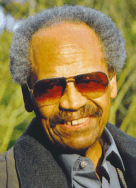
April 6 Poet of the Day: James Emanuel

James Emanuel is April 6 Poet of the Day.  Read more about this poet, scholar, and activist below.

jamesemanuel

Poetry Foundation: http://www.poetryfoundation.org/bio/james-a-emanuel#poet

African American Registry: http://www.aaregistry.org/historic_events/view/james-emanuel-poet-afar

Encyclopedia.com: http://www.encyclopedia.com/doc/1G2-3431200023.html

WingedWord Blog Post Interview: https://wingedword.wordpress.com/2009/10/26/an-interview-with-james-a-emanuel/

Dan Schneider Interview 5: James Emanuel: http://www.cosmoetica.com/DSI5.htm, Omniversica #2: James Emanuel Poet: https://www.youtube.com/watch?v=VjUP53j0d-U

Youtube videos: Joseph Langley: https://www.youtube.com/watch?v=EWHWm3iiFZQ, James Emanuel reading his poem “Emmett Till”: https://www.youtube.com/watch?v=YnZFPSPugNk, reads three poems: https://www.youtube.com/watch?v=S0Q3g5vNTQw

Poems from AfroPoets:

” I’m A Jazz Singer, ” She Replied
He dug what she said:
bright jellies, smooth marmalade
spread on warm brown bread.

“Jazz” from drowsy lips
orchids lift to honeybees
floating on long sips.
“Jazz”: quick fingerpops
pancake on a griddle-top
of memories. Stop.
“Jazz”: mysterious
as nutmeg, missing fingers,
gold, Less serious.
“Jazz”: cool bannister.
Don’t need no stair. Ways to climb
when the sax is there.

Written by James Emanuel

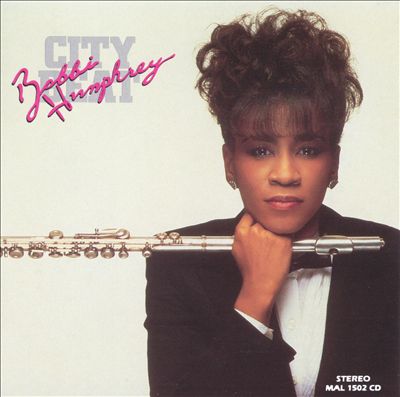
April 6 Jazz Artist of the Day: Bobbi Humphrey

Bobbi Humphrey, a jazz, fusion, pop flautist is April 6 Jazz Artist of the Day.  Read more about this influential jazz artist below.

bobbihumphrey

Website: http://www.bobbihumphrey.net/

AllMusic: http://www.allmusic.com/artist/bobbi-humphrey-mn0000766562

Youtube videos: “Harlem River Drive” https://www.youtube.com/watch?v=-i_Ja2sVw1g, “Blacks and Blues” https://www.youtube.com/watch?v=K6wkHpwS54Y, “Sunset Burgundy” https://www.youtube.com/watch?v=TKpcdv681rE

April 6 African American Historical Events

* Today in Black History – April 6 *

1798 – James P. Beckwourth is born in Fredericksburg, Virginia. He
will become a noted scout in the western United States and
will discover a pass in the Sierra Nevada mountains between
the Feather and Truckee rivers that will bear his name. He
will join the ancestors on October 29, 1866.

1830 – James Augustine Healy is born to an Irish planter and a slave
on a plantation near Macon, Georgia. He will become the
first African American Roman Catholic priest and the first
African American Roman Catholic bishop in America. He
will join the ancestors on August 5, 1900.

1865 – Writing in the “Philadelphia Press” under the pen name
“Rollin,” Thomas Morris Chester describes the Union Army’s
triumphant entry into the city of Richmond, Virginia, during
the closing days of the Civil War. Rollin is the only
African American newspaperman writing for a mainstream
daily. There will be no others for almost 70 years.

1869 – Ebenezer Don Carlos Bassett, the principal of the Institute for
Colored Youth in Philadelphia, Pennsylvania, is named Minister
to Haiti and becomes the first major African American diplomat
and the first African American to receive a major appointment
from the United States government.

1909 – Matthew Henson, accompanying Commander Robert Peary’s
expedition, is the first, in the party of six, to discover the
North Pole. The claim, disputed by scientific skeptics, was
upheld in 1989 by the Navigation Foundation. Although in
later years Henson will be called Peary’s servant or merely
“one Negro” on the expedition, Henson is a valuable colleague
and co-discoverer of the pole. Peary says, “I couldn’t get
along without him.”

1917 – America enters World War I. President Wilson, who has just
inaugurated a policy of segregation in government agencies,
tells Congress that “the world must be made safe for
democracy.”

1931 – The first trial of the Scottsboro Boys begins in Scottsboro,
Alabama. This trial of nine African American youths accused
of raping two white women on a freight train become a cause
celebre.

1931 – Ivan Dixon is born in New York City. He will become an actor
and director and will be best known for his comedic role on
the TV series “Hogan’s Heroes.” One of his first acting
credits will be for the celebrated television anthology show
“The Dupont Show of the Month” in the 1960 production of
“Arrowsmith.” He will go on to act in the film version of the
theatrical drama “A Raisin in the Sun” with Ruby Dee and
Sidney Poitier in 1961, in which he plays Asagai, the African
boyfriend of Beneatha. He will also portray Jim in the 1959
film version of “Porgy and Bess.” His other pre-“Hogan’s
Heroes” film work includes: “Something of Value” (1957), “The
Murder Men” (1961), and “The Battle at Bloody Beach” (1961).
After leaving Hogan’s heroes he will appear in more films
including “A Patch of Blue” and “Car Wash.” Ivan will begin
directing films in the early 1970s, such as the 1972 gang
warfare flick “Trouble Man” and the 1973 action movie “The
Spook Who Sat by the Door” (which he will also produce). For
television, he will direct “Love Is Not Enough” (1978), the
series “Palmerstown, U.S.A.” (1980), the detective series
“Hawaiian Heat” (1984), and the telemovie “Percy & Thunder”
(1993). He will join the ancestors on March 16, 2008.

1937 – William December is born in the village of Harlem in New York
City. He will become one of the most romantic leading men of
film and television, better known as ‘Billy Dee Williams.’
Among his best known roles will be football great Gale Sayers
in the TV movie “Brian’s Song” as well as leading parts in
the movies “Lady Sings the Blues,” “Mahogany” and two “Star
Wars” films.

1971 – “Contemporary Black Artists in America” opens at the Whitney
Museum of American Art in New York City. The exhibit includes
the work of 58 master painters and sculptors such as Jacob
Lawrence, Charles White, Alma Thomas, Betye Saar, David
Driskell, Richard Hunt, and others.

1994 – The presidents of Rwanda and Burundi are killed in a mysterious
plane crash near Rwanda’s capital. Widespread violence erupts
in Rwanda over claims the plane had been shot down.

Information retrieved from the Munirah Chronicle and is edited by Mr. Rene’ A. Perry.

April 5 African American Historical Events

* Today in Black History – April 5 *

1839 – Robert Smalls is born into slavery in Beaufort, South
Carolina. He will become a Civil War hero by sailing an
armed Confederate steamer out of Charleston Harbor and
presenting it to the Union Navy. He will later become a
three-term congressman from his state. He will join the
ancestors on February 23, 1915.

1856 – Booker Taliaferro Washington is born a slave near Hale’s
Ford, Virginia. He will become a world reknown educator,
founder of Tuskegee Institute. He will become one of the
most famous African American educators and leaders of the
19th century. His message of acquiring practical skills and
emphasizing self-help over political rights will be popular
among whites and segments of the African American community.
His 1901 autobiography, “Up From Slavery”, which details his
rise to success despite numerous obstacles, will become a
best-seller and further enhances his public image as a
self-made man. As popular as he will be in some circles,
Washington will be aggressively opposed by critics such as
W.E.B. Du Bois and William Monroe Trotter. He will join the
ancestors on November 14, 1915. He will become the first
African American to be honored on a U.S. postage stamp.

1879 – Charles W. Follis is born in Cloverdale, Virginia. He is the
first African American to play professional football. He
will play halfback for the Blues of Shelby, Ohio in 1904.
The Blues were part of the American Professional Football
League, a forerunner of the National Football League.

1915 – Jess Willard defeats Jack Johnson for the heavyweight boxing
crown in twenty three rounds.

1934 – Stanley Turrentine is born in Pittsburgh, Pennsylvania. He
will become a jazz saxophonist and in 1953, will replace the
famed John Coltrane in the popular big band of Earl Bostic.
After a three-year army stint, which affords him his only
formal musical training, Turrentine comes to prominence on
the New York Jazz scene as a member of Max Roach’s group
in 1959. Over the years, Turrentine’s recordings will
combine musical energies with friends such as Ron Carter,
Roland Hanna, Ray Charles, Freddie Hubbard, Jon Hendricks,
George Benson, Cedar Walton, Herbie Hancock, Kenny Burrell,
Milt Jackson, Joe Sample, Shirley Scott, Jimmy Smith, Grady
Tate, and many others. He will be nominated for the Grammy
Award four times. He will join the ancestors on September 12,
2000.

1937 – Colin Powell is born in New York City. He will become a
highly decorated Army officer, receiving the Bronze Star and
Purple Heart during the Vietnam War, and will be later
promoted to four-star general in 1988. He will become the
first African American to serve as the Chairman of the Joint
Chiefs of Staff for the U.S. Armed Forces.

1956 – Booker T. Washington becomes the only African American
honored twice on a U.S. postage stamp. To commemorate the
centennial of his birth, the U.S. Postal Service issues a
stamp depicting the cabin where he was born.

1967 – Philadelphia ’76er Wilt Chamberlain sets a NBA record of 41
rebounds in a single game.

1976 – FBI documents, released in response to a freedom of
information suit, reveal that the government mounted an
intensive campaign against civil rights organizations in the
sixties. In a letter dated August 25, 1967, the FBI said
the government operation, called COINTELPRO, was designed
“to expose, disrupt, misdirect, discredit or otherwise
neutralize the activities of Black nationalists, hate-type
groups, their leadership, spokesmen, membership and
supporters, and to counter their propensity for violence and
civil disorders.” A later telegram specifically named the
Student Nonviolent Coordinating Committee and the Southern
Christian Leadership Conference as organizations having
“radical and violence prone leaders, members and followers.”

1977 – Gertrude Downing receives a patent for the corner cleaner
attachment.

1984 – Kareem Abdul-Jabbar breaks Wilt Chamberlain’s all-time career
scoring record of 31,419 points (31,421).

1990 – Seven African American journalists are inducted into the
newly created Hall of Fame of the National Association of
Black Journalists in Washington, DC. Dubbed “pioneers of
mainstream journalism,” the inductees include Dorothy Butler
Gilliam of the Washington Post, Malvin R. Goode of ABC
News, Mal H. Johnson of Cox Broadcasting, Gordon Parks of
Life Magazine, Ted Poston of the New York Post, Norma
Quarles of Cable News Network, and Carl T. Rowan of King
Features Syndicate. Twelve Pulitzer Prize winners are also
honored at the awards ceremonies.

2000 – Ending a two-year investigation, an independent counsel clears
Labor Secretary Alexis Herman of allegations that she had
solicited $ 250,000 in illegal campaign contributions.

Information retrieved from the Munirah Chronicle and is edited by Mr. Rene’ A. Perry.
Praise for Books Deemed Perfect for Reluctant Readers

missdguzman's avatarLatinxs in Kid Lit

By Cindy L. Rodriguez

Recently, a few 2015 debut author friends have had their books reviewed as being “good for reluctant readers,” and the question was, “Is this a good thing?” I jumped into that online conversation because I work all day, every day with reluctant readers at my full-time day job as a reading specialist in a large suburban middle school in Connecticut.

First, what is a reluctant reader? It’s a student who can read but chooses not to. They are not illiterate. They are aliterate. When it’s designated silent reading time, they fake read. If a movie has been made, they watch it first. They can get by on quizzes and tests by listening to the teacher and peers talk about the book.Reluctant readers are not unintelligent. Some make it through high school successfully, with good grades, without ever reading a book cover to cover.

For some students…

View original post 1,195 more words

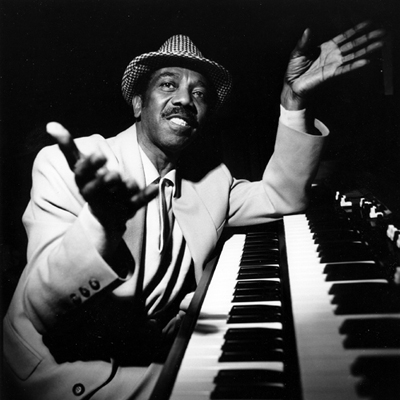
April 5 Jazz Artist of the Day: Jimmy Smith

Jimmy Smith, jazz organist, is Day 5 Jazz Artist of the Day.  Read more about this multitalented jazz artist below.

jimmysmith

All Music: http://www.allmusic.com/artist/jimmy-smith-mn0000781172

All About Jazz: http://www.allaboutjazz.com/jimmy-smith-master-of-the-hammond-b-3-jimmy-smith-by-mark-sabbatini.php

NPR: http://www.npr.org/2008/09/03/94262921/jimmy-smith-organ-grinder-swing

African American Registry: http://www.aaregistry.org/historic_events/view/jimmy-smith-made-organ-legitimate-jazz-instrument

Youtube videos: Documentary, 1965: https://www.youtube.com/watch?v=A9fObWXHTv4, “The Sermon” https://www.youtube.com/watch?v=vqSLoxwkCYE, “Walk on the Wild Side” https://www.youtube.com/watch?v=3oi-jdDDXDM