July 22 African American Historical Events

* Today in Black History – July 22 *

1848 – Lester Walton is appointed minister to Liberia.

1861 – Abraham Lincoln reads the first draft of the Emancipation
Proclamation to his cabinet.

1933 – Caterina Jarboro becomes the first African American prima
donna of an United States opera company. She will
perform “Aida” with the Chicago Opera Company at the
Hippodrome in New York City. The New York Times music
editor will report: “The young soprano brought a vivid
dramatic sense that kept her impersonation vital without
overacting, and an Italian diction remarkably pure and
distinct.” Her fame, however, will be short­lived. Once
the American opera establishment realizes that she is not
Italian but African American, her career will come to an
end. The newly founded New York Metropolitan Opera
Association will refuse to accept her as a member.
Nonetheless, her contribution to opera will be powerful
and far­reaching.

1937 – Chuck Jackson is born in Latta, South Carolina. He will
be raised in Pittsburgh and will become a Rhythm & Blues
singer. He will be discovered when he opens for soul
legend Jackie Wilson at the Apollo Theater. He will sign a
recording contract with Scepter. His first single,”I Don’t
Want to Cry”, which he co-wrote, will be his first hit
(1961). The song will chart on both Rhythm & Blues and pop
charts. In 1962, His recording of “Any Day Now”, the Burt
Bacharach-Bob Hilliard classic, will become a huge hit. In
1967, he will move from Scepter to Motown Records, where
he will record a number of successful singles, including
“Are You Lonely for Me” and “Honey Come Back.”

1939 – Jane Matilda Bolin is appointed to the New York City Court
of Domestic Relations by Mayor Fiorello Laguardia, becoming
the first African American woman judge.

1939 – Quincy Thomas Troupe, Jr. is born in New York City. He will
become a poet, editor, journalist, and college professor.
He will grow up in East St. Louis, Illinois. He will attend
Grambling State University on a baseball scholarship and
will subsequently join the United States Army. In his free
time as a soldier, he will develop the passion for writing
that would define his career. Upon his return to civilian
life, he will move to Los Angeles, where he will encounter
the Watts Writers Workshop and begin working in a more
African American, jazz-based style. It will be on a tour
with the Watts group that he first begin his academic life.
In 1969, he will visit Ohio University with the poetry tour
and will soon be offered a position as writer-in-residence.
In 1971, he will move to Richmond College on Staten Island
in New York City, where he will be a lecturer. In 1976,
Richmond College will undergo a merger and become the
College of Staten Island of the City University of New York.
It will be during this transition, he will later reveal,
that he adjusts his curriculum vitae to include a
(fictitious) bachelor’s degree he claims to have earned in
1963 from Grambling. He will make the addition in order to
possibly attain tenure, which he likely could not have done
without an academic degree. This fiction will go
unchallenged for nearly three decades. The next few years
will see him become a celebrity in the academic world,
winning an American Book Award for 1989’s “Miles, the
Autobiography” (written with Miles Davis) and earning
numerous other accolades. In 1990, he will move to the
University of California, San Diego (UCSD) as a professor
of literature, where he will continue to gain acclaim. In
early 2002, he will be named California’s first Poet
Laureate, taking office on June 11, 2002. A background
check related to the new position will reveal that he had,
in fact, never possessed a degree from Grambling.
Confronted with the information, he will resign the post.
After UCSD considers suspending him without pay, he retires
from his academic position as well. His other notable works
include “James Baldwin: The Legacy” (1989) and “Miles and
Me: A Memoir of Miles Davis” (2000). He will also edit
“Giant Talk: An Anthology of Third World Writing” (1975)
and is a founding editor of “Confrontation: A Journal of
Third World Literature and American Rag.” He will teach
creative writing for the Watts Writers’ Movement from 1966
to 1968 and serve as director of the Malcolm X Center in
Los Angeles during the summers of 1969 and 1970. Among his
honors and awards will be fellowships from the National
Foundation for the Arts, the New York Foundation for the
Arts, and a grant from the New York State Council on the
Arts.

1941 – George Clinton is born in Kannapolis, North Carolina. He
will grow up in Plainfield, New Jersey. In Plainfield, he
will run a barber salon, where he straightens hair, and
will soon formed a doo wop group, inspired by Frankie Lymon
& the Teenagers, called The Parliaments. The Parliaments
will eventually find success under the names Parliament and
Funkadelic in the seventies. Parliament Funkadelic will
record “Testify”, “Mothership Connection”, “First Thangs”,
“Up For The Down Stroke”, “Chocolate City”, “The Clones of
Dr. Funkenstein,” “Atomic Dog,” and many others. The
popularity of Clinton and his group will last over thirty
years. He will be widely considered one of the forefathers
of funk. Usually recording under the name George Clinton &
the P.Funk All-Stars, he will record several solo albums. In
1982, he will sign to Capitol Records as a solo artist and
as the P.Funk All-Stars, releasing Computer Games that same
year. “Loopzilla” hit the Top 20 R&B charts, followed by
“Atomic Dog,” which reached #1 R&B, but peaked at #101 on
the pop chart. In the next four years, he will release
three more studio albums (You Shouldn’t-Nuf Bit Fish, Some
of My Best Jokes Are Friends and R&B Skeletons in the
Closet) as well as a live album, Mothership Connection
(Live from the Summit, Houston, Texas) and charting three
singles in the R&B Top 30, “Nubian Nut,” “Last Dance,” and
“Do Fries Go with that Shake.” His popularity will wane in
the mid 1980s, but revive by the rise of rap music
(particularly, in the 1990s, G Funk), as many rappers cited
him as an influence and began sampling his songs. Alongside
James Brown, George Clinton will be considered to be one
of the most sampled musicians ever. In 1989, he will release
The Cinderella Theory on Paisley Park, Prince’s record
label. This will be followed by Hey Man, Smell My Finger.
He will then sign with Sony 550 and release T.A.P.O.A.F.O.M.
(The Awesome Power Of A Fully Operational Mothership) in
1996, having reunited with several old members of Parliament
and Funkadelic. He will be known for his flamboyant style.
In the 1990s, he will appear in films such as Graffiti
Bridge (1990), Good Burger (1997) and PCU (1994). He will
also appear as the voice of The Funktipus, the DJ of the
Bounce FM station in the 2004 video game, Grand Theft Auto:
San Andreas. Rapper Dr. Dre will sample most of his beats to
create his G-Funk music era.

1947 – Daniel Lebern “Danny” Glover is born in San Francisco,
California. He will become an actor and will star in the
“Lethal Weapon” movies, “Operation Dumbo Drop”, “Silverado”,
“Escape from Alcatraz”, “Chiefs”, “The Color Purple”,
“Angels in the Outfield”, and “Places in the Heart”. He will
serve as board chair of the TransAfrica Forum, “a non-profit
organization dedicated to educating the general public —
particularly African Americans — on the economic, political
and moral ramifications of U.S. foreign policy as it affects
Africa and the Diaspora in the Caribbean and Latin America.”
In March 1998, he will be appointed ambassador to the United
Nations Development Program. He will also serve on the
Advisory Council for TeleSUR, “Television of the South”, a
pan-Latin American television network based in Caracas,
Venezuela. It will begin broadcasting on July 24, 2005.
He is probably best known for his role as Los Angeles police
Sgt. Roger Murtaugh in the Lethal Weapon movie series, and
his role as the abusive husband to Whoopi Goldberg’s
character Celie in The Color Purple. Among many awards, he
will win five NAACP Image Awards, for his achievements as a
Black actor. He will join the ranks of actors, such as
Humphrey Bogart, Elliott Gould, and Robert Mitchum, who will
portray Raymond Chandler’s private eye detective Philip
Marlowe in the episode ‘Red Wind’ of the Showtime network’s
1995 series Fallen Angels. He will make his directorial
debut with the Showtime channel short film Override in 1994.

1961 – Milton A. Francis, the first African American specialist in
genitourinary diseases, joins the ancestors.

1963 – World Heavyweight Champion, Sonny Liston, hangs on to his
boxing title, by knocking out challenger, Floyd Patterson,
in the first round of a bout in Las Vegas, Nevada.

Information retrieved from the Munirah Chronicle and is edited by Mr. Rene’ A. Perry.
July 21 African American Historical Events

* Today in Black History – July 21 *

1864 – The New Orleans Tribune, first daily African American
newspaper, is published in English and French.

1896 – Mary Church Terrell organizes the National Association of
Colored Women in Washington, DC. The association is a
merger of the National Federation of Afro-American Women
and The Colored Women’s League. It is one of many
achievements for Terrell, which include being the first
African American woman to serve on a school’s board of
education, the first to hold membership in the American
Association of University Women, and at age 90, will lead
the desegregation of Washington, DC restaurants in 1953.

1934 – Edolphus Towns is born in Chadbourn, North Carolina. He
will graduate with a bachelor’s degree from North Carolina
A & T State University and a master’s degree in social
work from Adelphi University. He will become a longtime
local civic leader and congressman from New York’s 11th
District starting in 1983, and chairman of the
Congressional Black Caucus in 1990. He will have the
distinction of being the first African American to serve
as Deputy Brooklyn Borough President. Additionally, he and
his son, New York State Assemblyman Darryl Towns, will
become the first African American father/son tandem to
serve simultaneously in public office in New York State.
His varied professional background includes assignments as
an administrator at Beth Israel Medical Center, a
professor at New York’s Medgar Evers College and Fordham
University and a teacher in the New York City Public
School System. He is also a veteran of the United States
Army and an ordained Baptist minister. He will serve in the
United States House of Representatives from 1983 to 2013.

1943 – Captain Charles B, Hall, of Brazil, Indiana, becomes the
first African American pilot in World War II to shoot down
a Nazi plane. He is a member of the 99th Fighter Squadron
which is part of the 33rd Fighter Group. During his eighth
mission, while escorting B-25 bombers over Italy, Captain
Hall spots two Focke-Wulf FW 190s. He fires a long burst
at one as it turns left. After several hits the aircraft
will crash into the ground.

1943 – “Stormy Weather” premieres in New York City with Lena
Horne, Bill Robinson, Fats Waller, Cab Calloway, the
Nicholas Brothers, and Katherine Dunham. A week before
the premiere, Horne said of African American actors, “All
we ask is that the Negro be portrayed as a normal person.
A worker in a union meeting, a voter in the polls…or an
elected official. Perhaps I’m being naive. Perhaps these
things will never be straightened out on the screen itself,
but will have to wait until..[they’re] solved in real
life.”

1945 – Alton Henry Maddox, Jr. is born in Newnan, Georgia. He will
become a New York African American civil rights activist
and attorney. He will be best known for his representation
of Tawana Brawley (a black teenager who accused a group of
white men of abducting and sexually molesting her in
Dutchess County). He will be disbarred following his
involvement in the Tawana Brawley alleged hoax in 1990.

1950 – The first victory of the Korean War is won by African
American troops of the 24th Infantry Regiment, who
recapture Yechon after waging a 16-hour battle. The North
Koreans will launch a surprise invasion of South Korea on
25 June 1950. U.S. Army divisions stationed in Japan are
rushed to the defense of South Korea. The 25th Division is
ordered to South Korea on 5 July 1950. By mid July the
Division is fully deployed and ready to engage North
Korean forces. On 20 July 1950 the 3rd Battalion 24th
Infantry conducts the first combat action of the Division
when it attacks and destroys a well-dug-in North Korean
force which had seized the critical road hub of Yechon.
The recapture of Yechon is considered the first sizable
American ground victory of the war.

1957 – Althea Gibson becomes the first African American woman to
win a major U.S. tennis title. She won the Women’s
National clay court singles competition.

1960 – The country of Katanga forms in Africa.

1962 – 160 civil right activists jailed after demonstration in
Albany, Georgia.

Information retrieved from the Munirah Chronicle and is edited by Mr. Rene’ A. Perry.

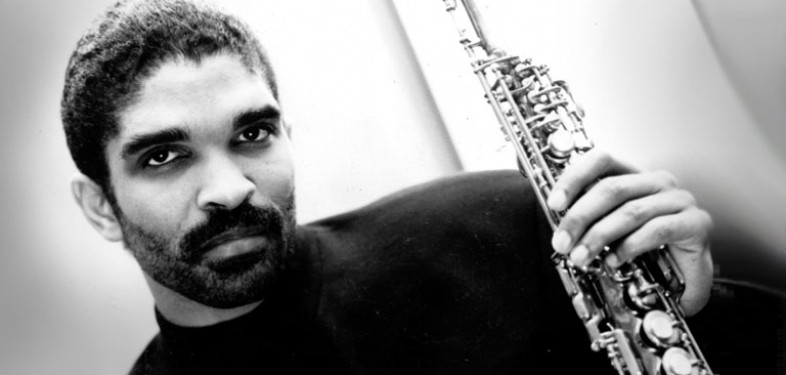
April 17 Jazz Artist of the Day: Art Porter

artporter

Art Porter, jazz musician, is April 17 artist of the day.  Read about this talented musician below:

Art Porter org: http://artporter.org/the-porter-legacy/art-porter-jr-

Arkansas Jazz Hall of Fame: http://www.arjazz.org/artists/hof/1998/98_porter.html

All Music: http://www.allmusic.com/artist/art-porter-mn0000604045

Music: “Inside Myself”: https://www.youtube.com/watch?v=6DdzVmncsYU; “Lake Shore Drive: https://www.youtube.com/watch?v=VH4zEl5dIH4; “Passion Sunrise”: https://www.youtube.com/watch?v=yL5x4-AEu1c; “Unending”: https://www.youtube.com/watch?v=4iJXqamuBbw

April 17 Poet of the Day: Wanda Coleman

WandaColeman_NewBioImage

Wanda Coleman, also known as the “L. A. Bluesman”, is April 17 Poet of the Day.  Read more about this fascinating poet below.

Poetry Foundation: http://www.poetryfoundation.org/bio/wanda-coleman

Poets.org: http://www.poets.org/poetsorg/poet/wanda-coleman

Poet Society of America: https://www.poetrysociety.org/psa/poetry/crossroads/qa_american_poetry/wanda_coleman/

Afro Poets: http://www.afropoets.net/wandacoleman.html

Videos: “Where I Live”: https://www.youtube.com/watch?v=CPJTI8WWI0E; “Wanda, Why Aren’t You Dead?”: https://www.youtube.com/watch?v=ALI-QlOU_ok; “My Car”: https://www.youtube.com/watch?v=TF8G5qYP2UY; “Luvina Reading”: https://www.youtube.com/watch?v=Izl8ktxEI6U Interviews: https://www.youtube.com/watch?v=eltV25FLh_Ihttps://www.youtube.com/watch?v=F7wzNRf6mJs

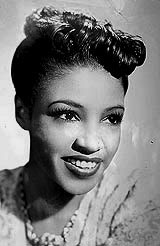
April 16 Jazz Artist of the Day: Maxine Sullivan

sullivan

Maxine Sullivan, a jazz musician and vocalist is April 16 Jazz Artist of the Day. Read about this multitalented artist below

Swing Music Jazz: http://www.swingmusic.net/Sullivan_Maxine.html

All Music: http://www.allmusic.com/artist/maxine-sullivan-mn0000395819

Pittsburgh Music History: https://sites.google.com/site/pittsburghmusichistory/pittsburgh-music-story/jazz/jazz—early-years/maxine-sullivan

Music: “Loch Lomond”: https://www.youtube.com/watch?v=zJm3wdb2r8s; “Blue Skies”:https://www.youtube.com/watch?v=FVz1ATv7vR8; “Skylark”: https://www.youtube.com/watch?v=bGLJ3AnwQ7w; “Ain’t Misbehavin”: https://www.youtube.com/watch?v=pmS-bcT6mSs

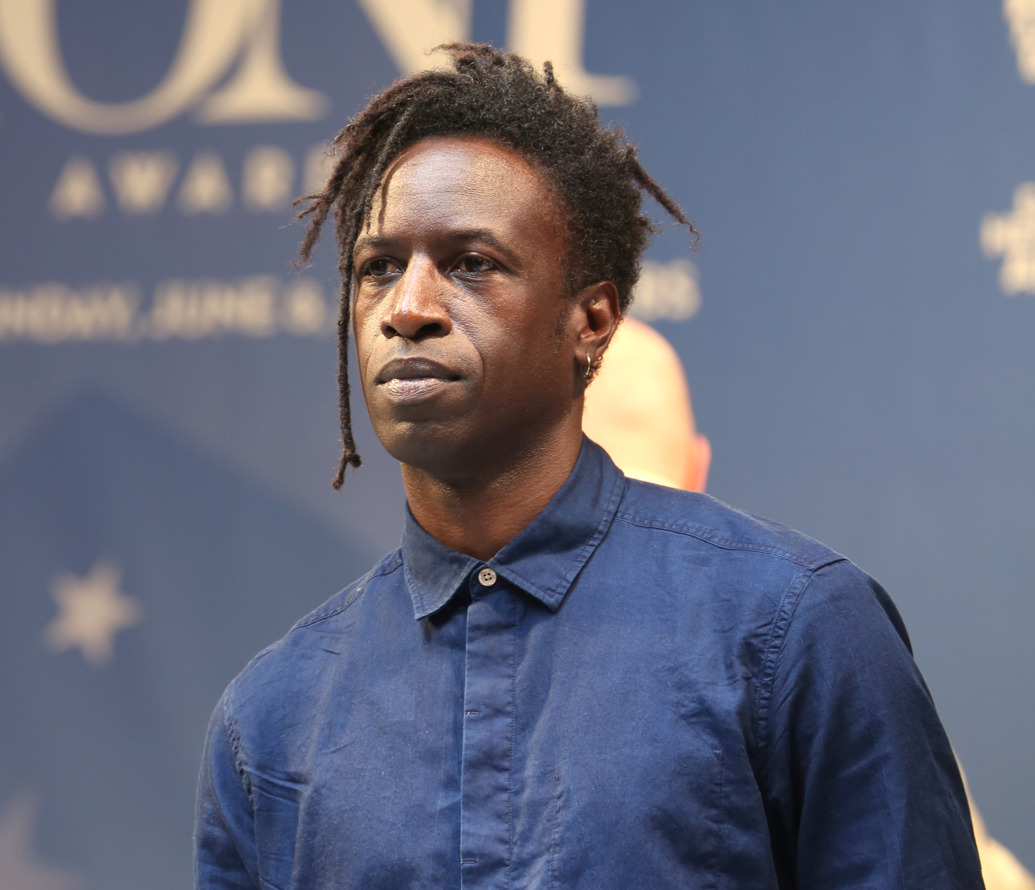
April 16 Poet of the Day: Saul Williams

NEW YORK, NY - MAY 21:  Saul Williams performs during the "Stars In The Alley" concert at Shubert Alley on May 21, 2014 in New York City.  (Photo by Walter McBride/Getty Images)

April 16 Poet of the Day is Saul Williams.  He is a multitalented artist who incorporates poetry, music, and other talents to create his music and spoken word.  Read more about this multitalented artist below.

Website: http://saulwilliams.com/

Poets.org: http://www.poets.org/poetsorg/text/saul-williams-dreadlocked-dervish-words

African American Literary Book Club: http://aalbc.com/authors/saul.htm

Videos: “List of Demands (Reparations)”: https://www.youtube.com/watch?v=zDMtaIcrfQ0; “Black Stacy”: https://www.youtube.com/watch?v=kRsgavuG4sg; “Amethyst Rock”: https://www.youtube.com/watch?v=LSR7H580e5U; “Explain My Heart”:https://www.youtube.com/watch?v=0_vUmvAXaWc

July 20 African American Historical Events

* Today in Black History – July 20 *

1934 – Henry Dumas is born in Sweet Home, Arkansas. He will move
to the village of Harlem in New York City at the age of
ten. He will attend City College and then join the Air
Force. While in the Air Force he will spend a year on
the Arabian Peninsula, where he will develop an interest
in the Arabic language, mythology, and culture. He will
be active in civil rights and humanitarian activities,
including transporting food and clothing to protesters
living in Mississippi and Tennessee. In 1967, he will
work at Southern Illinois University as a teacher,
counselor, and director of language workshops in its
“Experiment in Higher Education” program. It is there
where he meets Eugene Redmond, a fellow teacher in that
program. He and Redmond will read their poetry at common
gatherings; Redmond especially remembers him reading “Our
King Is Dead,” his elegy for Martin Luther King, Jr. He
will also frequent the offices of the East St. Louis
Monitor, which Redmond edits. He will inspire interest
for his unique vision of black people in the diaspora.
In many ways he will become a cultural icon in African
American literary circles. He will claim Moms Mabley and
gospel music as particular influences upon him. He will
join the ancestors on May 23, 1968 at the age of 33 after
being mistakenly shot and killed by a New York City
Transit policeman. Over the course of the ten months that
he lives in East St. Louis, he and Redmond will forge the
collaborative relationship that would prove so fruitful
to his posthumous Career. His literary legacy is kept
alive almost single-handedly by Redmond. His first
collection of short fiction is entitled “Arks of Bones
and Other Stories” (edited by Redmond in 1974), which
includes nine stories and in which his largely mythic
vision of African American existence is apparent.
Redmond’s commitment to making his work readily available
to scholarly communities will continue in the publication
of “Goodbye, Sweetwater” (1988) and “Knees of a Natural
Man: The Selected Poetry of Henry Dumas” (1989). The
first volume contains eight of the stories that first
appeared in “Ark of Bones,” along with excerpts from
Dumas’s unfinished novel, “Jonoah and the Green Stone”
(1976), stories from “Rope of Wind” (1979), and three
selections from “Goodbye Sweetwater.” One of the stories
in the final section is “Rain God,” which develops the
African American folk belief that, when it is raining and
the sun is shining, the devil is beating his wife. Three
young black boys literally witness this phenomenon as
they are on their way home one rainy-sunny day. The
second volume contains previously published as well as
unpublished poems, including several poems with the title
“Kef” and an accompanying number, and “Saba,” with the
same pattern. Some of the poems in “Knees” had appeared
in “Play Ebony: Play Ivory” (1974), a collection of his
poetry, which Redmond will edit singly in 1974 and which
he co-edits in 1970. His poetry is inspired by African
American music, particularly blues and jazz (he studied
with Sun Ra), and he develops themes consistent with the
Black Aesthetic of the 1960s. His poetry also focuses,
in keeping with his fiction, on themes of nature and the
natural world.

1954 – Freeman Bosley, Jr., St. Louis’ first African American
mayor, is born in St. Louis, Missouri. He will attend
Saint Louis University and Saint Louis University Law
School. He will graduate from Saint Louis University in
1976 with two undergraduate degrees, a B.A. in Urban
Affairs and a B.A. in Political Science. He will receive
his Juris Doctorate from Saint Louis University Law
School in 1979. His public service career will begin
when he becomes the first African American St. Louis
Circuit Clerk for the 22nd Judicial Circuit – a position
he will hold for ten years. He will serve as the 3rd
Ward Democratic Committeeman, chairman of the St. Louis
City Democratic Central Association, and the first
African American chairman of the Democratic Party in St.
Louis City. After winning the April 6, 1993 election
with 66.5% of the vote, he will become the first African
American Mayor of St. Louis. He will oversee the battle
against the Flood of 1993, help to orchestrate the $70
million bailout of Trans World Airlines and help to move
the Los Angeles Rams football team to St. Louis from
Anaheim, California. He will be defeated in his bid for
re-election.

1967 – The first National Conference of Black Power opens in
Newark, New Jersey. The four-day meeting is attended
by 1,100 African Americans.

1967 – A night of racially motivated disturbances occurs in
Memphis, Tennessee.

1973 – The National Black Network begins operations. It is the
first African American owned and operated radio news
network.

1974 – Baseball great, Hank Aaron, breaks Ty Cobb’s record, as
he appears in game number 3,034 of his career. Aaron,
age 40, is playing in his 20th season of major league
baseball.

1988 – In the most formidable attempt ever by an African
American to become President of the United States.
Jesse Jackson receives 1218 delegates votes of the
2,082 needed for the Democratic party’s nomination,
finishing second to Michael Dukakis. In his second bid
for the nomination, Jackson garners wide popular
support and captures 92% of African American and 12%
of white votes in primary elections and caucuses. The
previous night, Jackson electrifies the delegates with
a ringing speech encouraging them to “keep hope alive.”

Information retrieved from the Munirah Chronicle and is edited by Mr. Rene’ A. Perry.
July 19 African American Historical Events

* Today in Black History – July 19 *

1848 – The first Women’s Rights Convention is held in Seneca Falls,
New York. The convention is supported by Frederick Douglass
of nearby Rochester, New York, who attends the meeting and
speaks in defense of its organizer, Elizabeth Cady Stanton.

1866 – Tennessee becomes the first state to ratify the 14th
Amendment, supposedly guaranteeing civil rights to all
United States citizens.

1867 – Congress passes the third Reconstruction Act over President
Andrew Johnson’s veto.

1913 – The Tri-State Dental Association is formed in Buckroe Beach
(now part of Hampton), Virginia. It will be the forerunner
to the National Dental Association, an organization
dedicated to developing a national forum for African
American dentists in the United States.

1925 – Josephine Baker, entertainer and singer, makes her Paris
debut.

1940 – Surgeon Louis T. Wright is presented the Spingarn Medal for
his “contribution to the healing of mankind and for his
courageous, uncompromising position, often in the face of
bitter attack.” Among Wright’s many accomplishments was
being the first African American surgeon to be admitted to
the staff of Harlem Hospital and chairmanship of the board
of directors of the NAACP, a position he will hold for 17
years.

1941 – The first Army flying school for African Americans is
dedicated in Tuskegee, Alabama.

1941 – President Franklin D. Roosevelt appoints a Fair Employment
Practices Committee which includes two African Americans,
Earl B. Dickerson, a Chicago attorney, and Milton P.
Webster, vice-president of the Brotherhood of Sleeping Car
Porters.

1966 – The Hough district of Cleveland, Ohio, experiences racially
motivated disturbances that result in the mobilization of
the National Guard by Governor James A. Rhodes, who
declares a state of emergency in the city.

1967 – A racially motivated disturbance occurs in Durham, North
Carolina. The governor calls out the National Guard to
quell the disturbance.

1973 – Willie Mays is named to the National League all star team
for the 24th time, tying Stan Musial for the record number
of appearances.

1979 – Patricia R. Harris is named Secretary of Health and Human
Services. It is her second Cabinet-level appointment.
She had been Secretary of Housing and Urban Development.

1991 – The South African government acknowledges that it had been
giving money to the Inkatha Freedom Party, the main rival
of the African National Congress.

Information retrieved from the Munirah Chronicle and is edited by Mr. Rene’ A. Perry.
July 18 African American Historical Events

* Today in Black History – July 18 *

1753 – Lemuel Haynes, colonial American Congregational clergyman,
is born in West Hartford, Connecticut. He will be
abandoned at five months old by his African father and
Anglo mother. He will be indentured to a white family in
Massachusetts. When he becomes a free man at age 21 in
1774, one of his first choices is to join freedom’s cause
and serve in a military unit from Connecticut. He will
not only fight on the battlefield, but will write about
freedom in poems and essays. He will be inspired by the
Declaration of Independence, and in 1776 will write an
essay about the need to extend freedom to Africans. His
essay is called, “Liberty Further Extended.” After the
American Revolutionary War, he will study Latin, Greek
and theology, and will be licensed to preach in 1780. In
1785, he will be ordained to a church in Torrington,
Connecticut, making him the first African American to
pastor a white congregation. He also will become the
first African American to receive an honorary degree
(M.A.) from a White college (Middlebury College), in 1804
at its second commencement. He will serve as pastor in
Bennington, Manchester, and Granville, New York, until he
joins the ancestors on September 28, 1833 at the age of
eighty.

1863 – The 54th Massachusetts Volunteers charge Fort Wagner in
Charleston, South Carolina. Although the Union forces
suffer great losses, Sergeant William H. Carney of Company
C exhibits bravery in battle by maintaining the colors
high despite three bullet wounds. Although cited for
bravery, it will take 37 years for Carney to receive the
Congressional Medal of Honor for his actions.

1899 – Patent number 629,286 is issued to L.C. Bailey for a
folding bed.

1905 – Granville T. Woods patents railway brakes.

1918 – Nelson Rolihlahla Mandela is born near Umtata in Transkei,
South Africa in the Eastern Cape, into the royal family
of the Tembu, a Xhosa-speaking tribe. His father is Chief
Henry Mandela. He will be educated at University College
of Fort Hare and the University of Witwatersrand and
qualifies to practice law in 1942. He will join the
African National Congress in 1944 and engage in resistance
against the ruling National Party’s apartheid policies
after 1948. He will go on trial for treason in 1956-1961
and be acquitted in 1961. After the banning of the ANC in
1960, he will argue for the setting up of a military wing
within the ANC. In June 1961, the ANC executive will
consider his proposal on the use of violent tactics and
agree that those members who wished to involve themselves
in his campaign would not be stopped from doing so by the
ANC. This will lead to the formation of Umkhonto we Sizwe.
He will be arrested in 1962 and sentenced to five years’
imprisonment with hard labor. In 1963, when many fellow
leaders of the ANC and the Umkhonto we Sizwe are arrested,
he will be brought to stand trial with them for plotting
to overthrow the government by violence. His statement
from the dock will receive considerable international
publicity. On June 12, 1964, he is among eight accused,
that will be sentenced to life imprisonment. From 1964 to
1982, he will be incarcerated at Robben Island Prison, off
the shore from Cape Town; thereafter, he will be at
Pollsmoor Prison, nearby on the mainland. He will be
released on February 11, 1990. After his release, he will
plunge himself wholeheartedly into his life’s work,
striving to attain the goals he and others had set out
almost four decades earlier. In 1991, at the first
national conference of the ANC held inside South Africa
after the organization had been banned in 1960, Mandela
will be elected President of the ANC while his lifelong
friend and colleague, Oliver Tambo, will become the
organization’s National Chairperson. He will become the
first Black African President of South Africa on May 10,
1994 (Inauguration Date) and serve until June 14, 1999.
He will join the ancestors on December 5, 2013.

1941 – Martha Reeves is born in Eufaula, Alabama. Her family will
move to Detroit, Michigan before her first birthday. As a
child, she will sing in her grandfather’s church and in
school, and continue her vocal training through high school.
After graduating in 1959, she will join a girl group called
the Fascinations, and the following year co-founds the
Del-Phis, whose membership will include the future
Vandellas. In 1961, she will win a talent contest as a solo
act and get a nightclub engagement performing as Martha
LaVaille. There she will be noticed by Motown executive
William “Mickey” Stevenson, who will invite her to stop by
the label’s offices. She will not land an audition right
away, but will parlay her visit into a secretarial job in
the A&R department. She will catch a lucky break when backup
singers are needed for a recording session, and the Del-Phis
will wind up supporting Marvin Gaye on his first hit, 1962’s
“Stubborn Kind of Fellow.” Stevenson will be impressed
enough to record a Del-Phis (renamed the Vels) single,
“You’ll Never Cherish a Love So True (‘Til You Lose It),”
and release it on Motown’s Mel-O-Dy subsidiary. One day,
Mary Wells fails to show up for a recording session, and
musicians’ union rules demand that a lead vocalist be
present on the microphone — so she will be hastily tapped
to sing “I’ll Have to Let Him Go.” That song will become
the first single credited to the newly renamed Martha & the
Vandellas in 1963. Their second single, the ballad “Come
and Get These Memories,” will reach the Rhythm & Blues Top
Five. Martha & the Vandellas will rack up an impressive
slate of Motown classics that will include the Top Five
smashes “(Love Is Like A) Heat Wave” and “Dancing in the
Street,” plus “Nowhere to Run,” “I’m Ready for Love,”
“Jimmy Mack,” and “Honey Chile,” all of which will make the
Rhythm & Blues Top Five. Martha & the Vandellas’ run of
success will continue through 1967. They will continue to
perform and record for several more years, but will never
match their past success and will disband in December 1972
after a farewell concert in Detroit. She will eventually
leave Motown and record for other labels with minimal
success. In 1989, she will reunite with original Vandellas
Annette Sterling and Rosalind Holmes and cut the single
“Step Into My Shoes” for British producer Ian Levine’s
Motor City label. However, she will continue to make her
primary living on the nostalgia circuit. She will be
inducted into the Rock and Roll Hall of Fame in 1995.

1951 – Jersey Joe Walcott, at age 37, becomes oldest boxer to date,
to win the World Heavyweight Championship knocking out
Ezzard Charles in five rounds.

1959 – William Wright becomes the first African American to win a
a USGA title, the U.S. Amateur Public Links Championship.
He is 23 and a senior at Western Washington University.

1964 – Racially motivated disturbances occur in Harlem in New York
City. The civil unrest will last until July 22 and will
spread into the Bedford-Stuyvesant section of Brooklyn.

1970 – Willie Mays gets his 3,000th base hit.

1998 – The “Spirit of Freedom Memorial” and “Theme Park” is
unveiled in Washington, DC to honor the U. S. Colored
Troops, who fought in the U.S. Civil War.walmart.com

Information retrieved from the Munirah Chronicle and is edited by Mr. Rene’ A. Perry.

July 17 African American Historical Events

* Today in Black History – July 17 *

1794 – Richard Allen organizes Philadelphia’s Bethel African
Methodist Episcopal Church.

1794 – Absalom Jones and his followers dedicate The African Church
of St. Thomas in Philadelphia. On August 12, 1794, the St.
Thomas parishioners will affiliate with the Protestant
Episcopal Church.

1862 – Congress approves the rights of African Americans to bear
arms to fight in the Civil War and enlist in the Union Army
by passing two laws, the Confiscation and Militia acts.
Over 208,000 African Americans and their white officers
will serve in the Union Army, with 38,000 losing their
lives.

1863 – Unions troops, with First Kansas volunteers playing a
leading role, route rebels at Honey Springs, Indian
Territory. African American troops capture the colors of a
Texas regiment.

1911 – Frank Snowden is born in York County, Virginia. He will
become the foremost scholar on Blacks in ancient history,
notably for his books “Blacks in Antiquity: Ethiopians in
the Greco-Roman Experience” and “Before Color Prejudice:
The Ancient View of Blacks”. He will document that in ancient
Rome and Greece, racial prejudice was not an issue. Much of
this, according to his research, is because most of the
Blacks they encountered were not slaves. Most slaves in the
Roman Empire were white. Most of the Blacks they met were
warriors, statesmen, and mercenaries. Therefore, Blacks were
not subjected to the racism of modern civilization. He will
study ancient art and literature, and find evidence that
Blacks were able to co-exist with the Greeks and Romans. He
will join the ancestors on February 18, 2007.

1935 – Carol Diann Johnson (Diahann Carroll) is born in the Bronx,
New York. She will be better known as Diahann Carroll,
star of Broadway (“House of Flowers”), television (“Julia”),
and films including “Carmen Jones” and “Claudine”, the
latter earning her an Academy Award nomination as Best
Actress. Beginning her music career at an early age, she
will be the recipient of a Metropolitan Opera scholarship
for studies at New York’s High School of Music and Art at a
mere ten years of age. While still a teenager, she will
begin working part-time as a model, a TV actress, and as a
nightclub singer, leading to her Broadway debut (the Harold
Arlen/Truman Capote production “House of Flowers”) and her
film debut (the modern version of Bizet’s opera “Carmen”
with an all-black cast “Carmen Jones”) both in 1954. More
movie work will come her way (including the 1959 film
version of “Porgy & Bess”), as well as a Tony Award in 1962
for her work on the Broadway production “No Strings.”
Beginning in the late ’50s, she will launch a successful
recording career, issuing albums on a regular basis
throughout the next two decades (including such titles as
1957’s “Diahann Carroll Sings Harold Arlen,” 1960’s
“Diahann Carroll and Andre Previn,” and 1962’s “The
Fabulous “Diahann Carroll,” among many others). In the late
’60s, she will star in the TV sitcom “Julia,” for which she
will be nominated for an Emmy Award and the recipient of a
Golden Globe Award for Best Actress. The ’70s will see her
give arguably the finest acting performance of her career
in 1974’s “Claudine,” for which she was nominated for an
Academy Award. She will return to TV work in the mid-’80s
with her portrayal of businesswoman Dominique Devereaux on
the hit nighttime soap opera “Dynasty,” while she earns her
second Emmy nomination for a guest appearance on the comedy
series “A Different World” (also during the same decade, she
will publish an autobiography, 1986’s “Diahann”). In the
’90s, she will star in a production of Andrew Lloyd Webber’s
“Sunset Boulevard” and tour the U.S. performing classic
Broadway standards in “Almost Like Being in Love: The Lerner
and Loewe Songbook.” 2001 will see the release of the
16-track compilation “Nobody Sees Me Cry: The Best of the
Columbia Years.”

1944 – An ammunitions depot at Port Chicago, California explodes
killing 320 men including 202 African Americans assigned by
the Navy to handle explosives. The resulting refusal of 258
African Americans to return to the dangerous work formed the
basis of the trial and conviction of 50 of the men in what
will become known as the Port Chicago Mutiny.

1959 – Billie Holiday, blues singer, joins the ancestors after
succumbing to liver failure at the age of 44 in Metropolitan
Hospital, New York City.

1967 – A racially motivated disturbance occurs in Cairo, Illinois
(within 100 miles of the Mississippi border. The Illinois
National Guard is mobilized during the three day civil
disturbance.

1967 – Innovative and famed jazz musician, John Coltrane joins the
ancestors after succumbing to cirrhosis of the liver at the
age of 40 in Huntington Hospital, Long Island, New York.

1981 – The Fulton County (Atlanta) grand jury indicts Wayne B.
Williams, a twenty-three-year-old photographer, for the
murder of two of the twenty-eight Black youths killed in a
series of slayings and disappearances in Atlanta. He will
deny the charges and be convicted in February, 1982.

Information retrieved from the Munirah Chronicle and is edited by Mr. Rene’ A. Perry.