
A post from Edi Campbell:
A Rich Year for Art-Related Kid Lit with Latino Flair

By Sujei Lugo and Lila Quintero Weaver
The year 2014 brought us three outstanding Latino children’s books celebrating art. Each book represents a distinct format: Draw! by Raúl Colón, is a wordless picture book; Viva Frida, by Yuyi Morales, is a poetic tribute to a beloved artist of worldwide importance; and Frida & Diego: Art, Love, Life, by Catherine Reef, is a work of non-fiction geared toward upper-level grades. These releases came in a year already brimming with strong Latino titles in children’s publishing, along with the We Need Diverse Books campaign, which challenges publishers and others in the book industry to question their views and roles regarding literature by and about people of color.
And guess what? Latin@s create art, too, so why shouldn’t they be celebrated in art-related books?
Children’s books that extol visual art serve to influence readers in significant ways. Through them, children can learn…
View original post 1,147 more words
Terrance Hayes, Bagley Wright, and the Library of Congress

Last week I attended a Bagley Wright Lecture on Poetry at the Library of Congress, given by Terrance Hayes. His lecture was on “Ideas of Influence” where he discussed Etheridge Knight and – you should really just listen to the lecture yourself because I’m getting ready to jack up this explanation – the idea of poets being “liquid.” Liquid, in the sense of being able to be influenced by many different groups – whether that be a local group of writers you meet with on a regular basis versus attending a workshop like Cave Canem, which potentially can bring people from all over the nation.
Hayes has a new collection of poetry coming out this year called How to be Drawn. The video below is him reading a poem from that collection (That’s an assumption on my part because of the title).
Depression in YA and the Latin@ Community

 When I was 23 years old, I left Connecticut for Boston for what should have been an amazing experience. I had been recently hired to be a researcher for the Boston Globe’s award-winning investigative team, a dream come true for a young journalist. Over the next two years, however, depression slowly ruined me, although many people close to me never knew. I wrote about it for the Courant years later, when my mind was clear enough to make sense of it. Here’s an excerpt from that article:
“It was a rainy February night in 1997 when it became apparent that the depression was no longer a temporary emotion, but a disease that had invaded every part of my life. I had gotten into my car after work and cried all the way home. I can’t remember why. But I remember feeling like I was choking, like…
View original post 877 more words
Rap It Up from Edi Campbell
An insightful post from my friend and colleague, Edi Campbell:
Congratulations to the ALA Youth Media Awards Winners and Honorees
A huge CONGRATULATIONS to the Latin@ authors and books that were recognized at this year’s ALA Youth Media Awards.

Here are the winners and honor books:
Pura Belpré Award (Illustrator) honoring a Latino writer and illustrator whose children’s books best portray, affirm, and celebrate the Latino cultural experience.
Winner:

Honor Books:

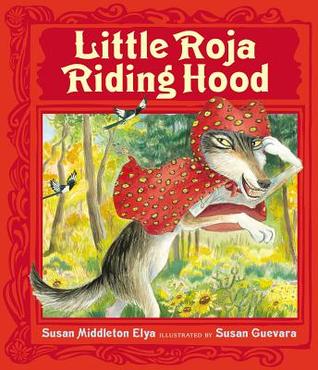

Pura Belpré Award (Author) honoring Latino authors whose work best portrays, affirms, and celebrates the Latino cultural experience:

Honor Book:

William C. Morris Award for a debut book published by a first-time author writing for teens:

Randolph Caldecott Medal for the most distinguished American picture book for children. The Caldecott Honor Books included:

Robert F. Sibert Informational Book Award for most distinguished informational book for children. The Sibert Honor Books included:
2016 May Hill Arbuthnot Honor Lecture Award recognizing an author, critic, librarian, historian or teacher of children’s literature, who then presents a lecture at a…
View original post 29 more words
January 4 African American Historical Events
* Today in Black History – January 4 *
1787 – Prince Hall, founder of the first African American Masonic
lodge, and others petition the Massachusetts legislature for
funds to return to Africa. The plan is the first recorded
effort by African Americans to return to their homeland.
1832 – A major insurrection of slaves on Trinidad occurs.
1901 – Cyril Lionel Richard James is born in Tunapuna, Trinidad. He
will become a writer, historian, Marxist social critic, and
activist who deeply influenced the intellectual underpinnings
of West Indian and African movements for independence. He was
born into an educated family in colonial Trinidad. At the age
of nine He earned a scholarship to Queen’s Royal College, in
Port of Spain, Trinidad, and graduated in 1918. In 1932 James
left Trinidad for England. He will become involved in socialist
politics, gravitating toward a faction of anti-Stalinist
Marxists. He applied Leon Trotsky’s views about a worldwide
workers’ revolution to his colonial home. The result, in part,
was “The Life of Captain Cipriani: An Account of British
Government in the West Indies” (1932), in which he called for
Caribbean independence. For a time in the 1970s he taught at
Federal City College in Washington, D.C. He lived the last
years of his life in London. Three volumes of his collected
works appeared as “The Future in the Present” (1977), “Spheres
of Existence” (1980), and “At the Rendezvous of Victory”
(1984). He will join the ancestors on May 31, 1989 in London,
England.
1920 – Andrew “Rube” Foster organizes the Negro National Baseball
League.
1935 – Floyd Patterson is born in Waco, North Carolina. He will become
a boxer, winning a gold medal in the 1952 Summer Olympic Games
in the middleweight class. He will become the first gold
medalist to win a world professional title. He will join the
ancestors on May 11, 2006.
1937 – Grace Ann Bumbry is born in St. Louis, Missouri. She will grow
up at 1703 Goode Avenue in the city. She will join the Union
Memorial Methodist Church’s choir at eleven, and sing at Sumner
High School. She will be a 1954 winner on the “Arthur Godfrey
Talent Scouts” show. After her concert debut in London in 1959,
Bumbry debuts with the Paris Opera the next year. In 1961,
Richard Wagner’s grandson features her in Bayreuth, Germany’s
Wagner Festival. The first person of African descent to sing
there, Bumbry will be an international sensation and win the
Wagner Medal. A mezzo-soprano who also successfully sang the
soprano repertoire, Grace Bumbry will record on four labels and
sing in concerts world wide. Her honors will include induction
into the St. Louis Walk of Fame, the UNESCO Award, the
Distinguished Alumna Award from the Academy of Music of the
West, Italy’s Premio Giuseppe Verdi, and being named Commandeur
des Arts et Lettres by the French government.
1944 – Dr. Ralph J. Bunche is appointed the first African American
official in the U.S. State Department.
1971 – Dr. Melvin H. Evans is inaugurated as the first elected governor
of the U.S. Virgin Islands.
1985 – Congressman William H. Gray is elected chairman of the House
Budget Committee, the highest congressional post, to date, held
by an African American.
1986 – David Robinson blocks a N.C.A.A. record 14 shots while playing
for the U.S. Naval Academy.
Information retrieved from the Munirah Chronicle and is edited by Mr. Rene’ A. Perry.
2015 Reading Challenges
Every new year, I often look for, but often fail to participate in, Reading Challenges. This year, I am participating in two Reading Challenges: Diversity on the Shelf 2015 and The Unconventional Librarian’s 2015 Diversity Reading Challenge. Both challenges support the need to read diverse books in a variety of ways.
Check back to see which books I have read for both challenges!
I have finally begun to read for the Reading Challenges! The books I have read so far:
Bayou Magic, Jewell Parker Rhodes
Stella by Starlight, Sharon Draper
Chasing Freedom, Nikki Grimes, illustrated by Michele Wood
Last Stop on Market Street by Matt De La Pena, illustrated by Christian Robinson
Gone Crazy in Alabama, Rita Garcia-Williams
According to the Diversity on the Shelf 2015, I have finished my first shelf! Yes!
I have also read some books that meet the Unconventional Librarian’s 2015 Diversity Reading Challenge:
1. A book written by an author of color: Gone Crazy in Alabama and Stella by Starlight
2. A book with a person of color on the cover: Gone Crazy in Alabama
4. A book in which the main character or a strong secondary character has a disability: The War That Saved My Life by Kimberly Brubaker Bradley
6. A non-fiction or biography about someone of diverse background: Chasing Freedom by Nikki Grimes
7. A book with an illustrator of color: Chasing Freedom, illustrated by Michele Wood
January 3 African American Historical Events
* Today in Black History – January 3 *
1621 – William Tucker is born in Jamestown, Virginia. He is the first
African American child, on record, born in the American
colonies.
1945 – The Albany Institute of History and Art in New York State opens
its exhibit “The Negro Artist Comes of Age: A National Survey of
Contemporary American Artists.” The show includes works by
Aaron Douglas, William H. Johnson, Palmer Hayden, Eldzier
Cortor, Lois Mailou Jones, and others and will run for five weeks.
1947 – The National Association for the Advancement of Colored People’s
annual report calls 1946 “one of the grimmest years in the
history of the NAACP.” The report details violence and
atrocities heaped on “Negro veterans freshly returned from a
war to end torture and racial extermination,” and said “Negroes
in America have been disillusioned over the wave of lynchings,
brutality and official recession from all of the flamboyant
promises of post war democracy and decency.”
1947 – William Dawson becomes the first African American to head a
congressional committee; Congressional proceedings are televised
for the first time as viewers in Washington, Philadelphia and
New York got to see some of the opening ceremonies of the 80th
Congress.
1956 – The Colored Methodist Episcopal Church, established in 1870,
officially changes its name to the Christian Methodist Episcopal
Church. The denomination is headquartered today in Memphis,
Tennessee, and comprises a membership of nearly 500,000.
1961 – Adam Clayton Powell, Jr. is elected Chairman of The House
Education and Labor Committee.
1966 – Floyd B. McKissick, a North Carolina attorney, is named national
director of The Congress of Racial Equality (CORE).
1969 – Louis Stokes is sworn in as the first African American
congressman from the state of Ohio. He will serve more that ten
terms in Congress and be distinguished by his leadership of the
1977 Select Committee on Assassinations and chairmanship of the
House Committee on Standards of Official Conduct (Ethics
Committee).
1969 – Representative Adam Clayton Powell, Jr. is seated by Congress
after being expelled by Congress in 1967, and re-elected by the
voters in his Harlem district.
1983 – Tony Dorsett sets an NFL record with a 99-yd rush, in a game
between the Dallas Cowboys and the Minnesota Vikings.
1984 – Syria frees captured U.S. pilot Robert Goodman, shot down over
Damascus, after a personal appeal from Rev. Jesse Jackson.
1985 – Soprano, Leontyne Price bids adieu to the Metropolitan Opera in
New York. She sings the title role of “Aida”. Price had been
part of the Metropolitan Opera since 1961.
1985 – The Israeli government confirms the resettlement of 10,000
Ethiopian Jews.
1987 – The Rock and Roll Hall of Fame inducts its first female artist –
“Lady Soul,” Aretha Franklin.
1989 – “The Arsenio Hall Show” premieres. It is the first regularly
scheduled nightly talk show to star an African American.
1997 – Bryant Gumbel co-hosts his final “Today” show on NBC.
Information retrieved from the Munirah Chronicle and is edited by Mr. Rene’ A. Perry.
January 2 African American Historical Events
* Today in Black History – January 2 *
1800 – Members of the Free Black Commission of Philadelphia petitions
Congress to abolish slavery.
1831 – The “Liberator” is published for the first time. An abolitionist
newspaper, it is started by William Lloyd Garrison.
1837 – The first National Negro Congress is held in Washington, DC.
1872 – The Mississippi legislature meets and elects John R. Lynch as the
Speaker of the House, at the age of twenty-four.
1898 – Sadie Tanner Mossell Alexander is born in Philadelphia,
Pennsylvania. She will become the first African American to
earn a Ph.D. in economics. She will join the ancestors on
November 1, 1989.
1903 – President Theodore Roosevelt shuts down the U.S. Post Office in
Indianola, Mississippi, for refusing to accept its appointed
postmistress because she is an African American.
1915 – John Hope Franklin is born in Rentlesville, Oklahoma. He will
become a scholar and historian most famous for his book “From
Slavery to Freedom: A History of Negro Americans,” which will
sell over two million copies. He will join the ancestors on
March 25, 2009.
1947 – Calvin Hill is born in the Turner Station neighborhood in
Dundalk, Maryland. He will be a running back with a 12 year
National Football League career from 1969 to 1981. He played for
the Dallas Cowboys, Washington Redskins and Cleveland Browns.
He will be named to the Pro Bowl team 4 times (1969, 1972, 1973
and 1974). He will be the father of NBA star Grant Hill.
1957 – Sugar Ray Robinson is defeated by Gene Fullmer for the world
middleweight boxing title.
1963 – Bobby “Blue” Bland’s “That’s The Way Love Is” is released by
Duke Records.
1965 – The Selma, Alabama voter registration drive begins, led by the
Rev. Dr. Martin Luther King, Jr. It is a major effort to get
African American voters registered to vote in Alabama.
1970 – Clifton Reginald Wharton, Jr. becomes the first African American
president of Michigan State University and the first African
American president of a major American university in the
twentieth century.
1970 – Dr. Benjamin E. Mays is named the first African American
president of the Atlanta, Georgia Board of Education.
1977 – Erroll Garner, pianist and composer, joins the ancestors in Los
Angeles, California. He was considered the best-selling jazz
pianist in the world, most famous for the jazz standard “Misty.”
1977 – Ellis Wilson joins the ancestors. An artist known for his
striking paintings of African Americans, his work had been
exhibited at the New York World’s Fair of 1939, the Harmon
Foundation, and the Detroit Institute of Arts. Among his
best-known works are “Funeral Procession,” “Field Workers,” and
“To Market.”
1980 – Larry Williams, rhythm and blues singer best known for “Bony
Maronie”, joins the ancestors. He is found dead with a
gunshot wound to the head at the age of 45.
1981 – David Lynch, singer with The Platters, joins the ancestors at the
age of 76.
1984 – W. Wilson Goode, the son of a sharecropper, is sworn in as the
first African American mayor of Philadelphia, Pennsylvania.
1991 – Sharon Pratt Dixon is sworn in as mayor of Washington, DC,
becoming the first African American woman to head a city of
Washington’s size and prominence.
Information retrieved from the Munirah Chronicle and is edited by Mr. Rene’ A. Perr.y

