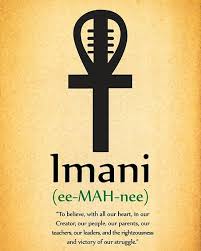
Kwanzaa Principle Day 7: Imani Faith
Book 1: Strength to Love by Martin Luther King, Jr.

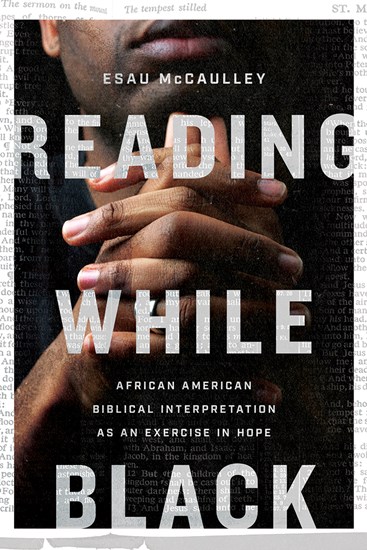
Book 2: Reading While Black by Esau McCauley
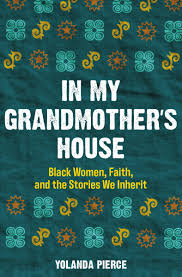
Book 3: In My Grandmother’s House by Yolanda Pierce
Kwanzaa Principle Day 7: Imani Faith
Book 1: Strength to Love by Martin Luther King, Jr.
Book 2: Reading While Black by Esau McCauley
Book 3: In My Grandmother’s House by Yolanda Pierce
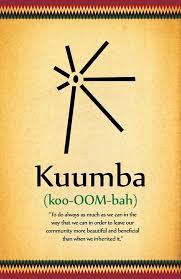
Kwanzaa Principle Day 6: Kuumba Creativity:
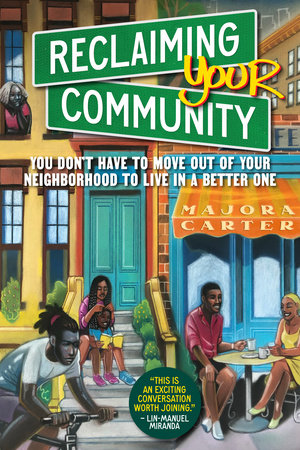
Book: Reclaiming Your Community by Marjora Carter
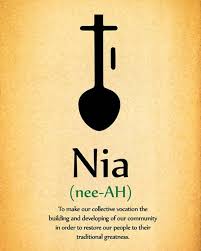
Kwanzaa Principle 5 Nia Purpose:
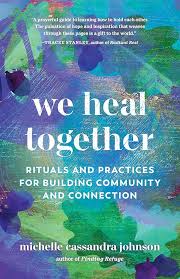
Book 1: We Heal Together by Michelle Cassandra Johnson
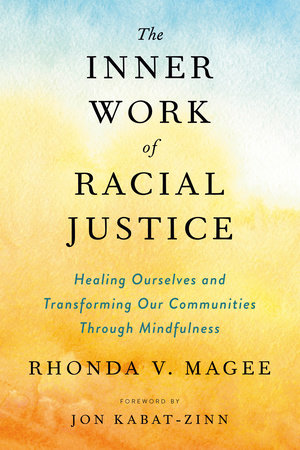
Book 2: The Inner Work for Racial Justice by Rhonda V. Magee
Book 3: Community Organizing and Community Building for Health and Social Equity
Habari Gani! What’s the news? Kwanzaa Principle Day 4: Ujamaa Cooperative Economics

Three books that illustrate cooperative economics in theory and practice:
Book 1: Collective Courage A history of Cooperative Economics Thought and Practice
Book 2: The Power in the Room
Book 3: Jackson Rising Redux
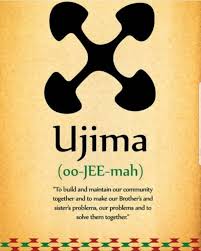
Kwanzaa Day 3: Ujima Collective Work and Responsibility
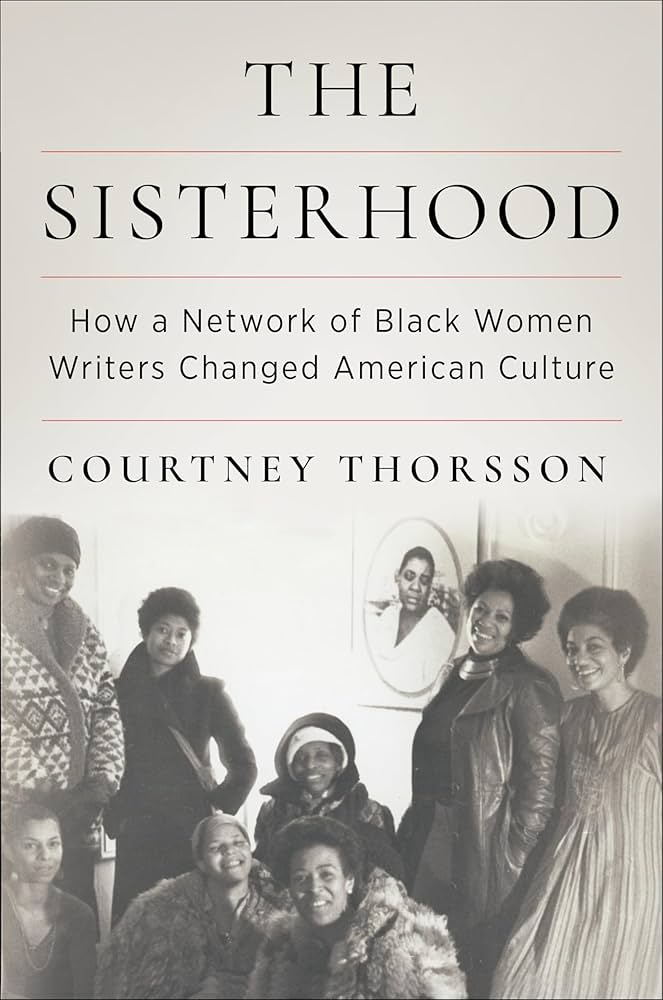
Book 1: The Sisterhood by Courtney Thorsson
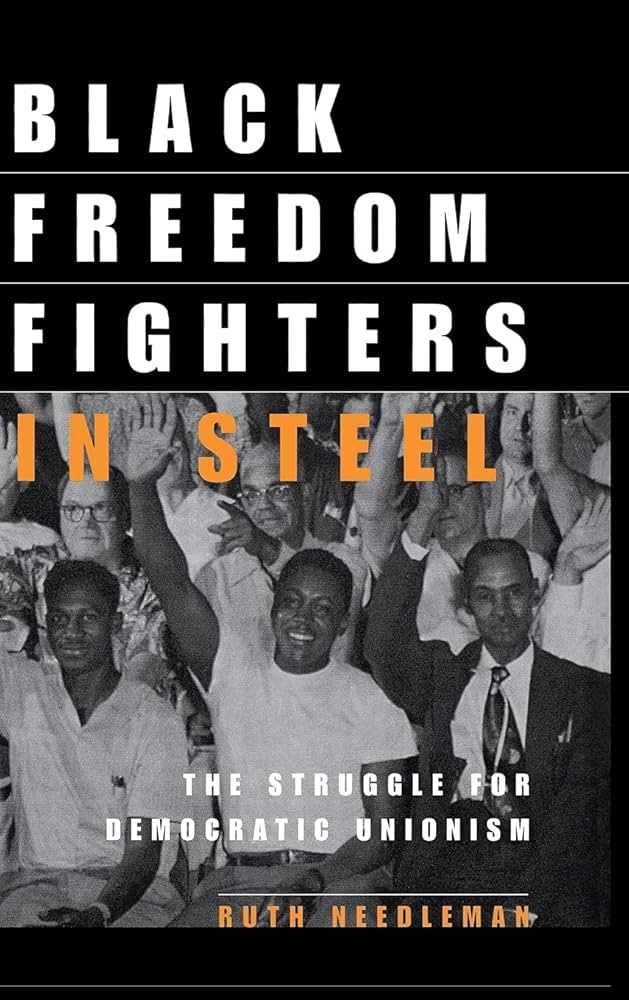
Book 2: Black Freedom Fighters in Steel by Ruth Needleman
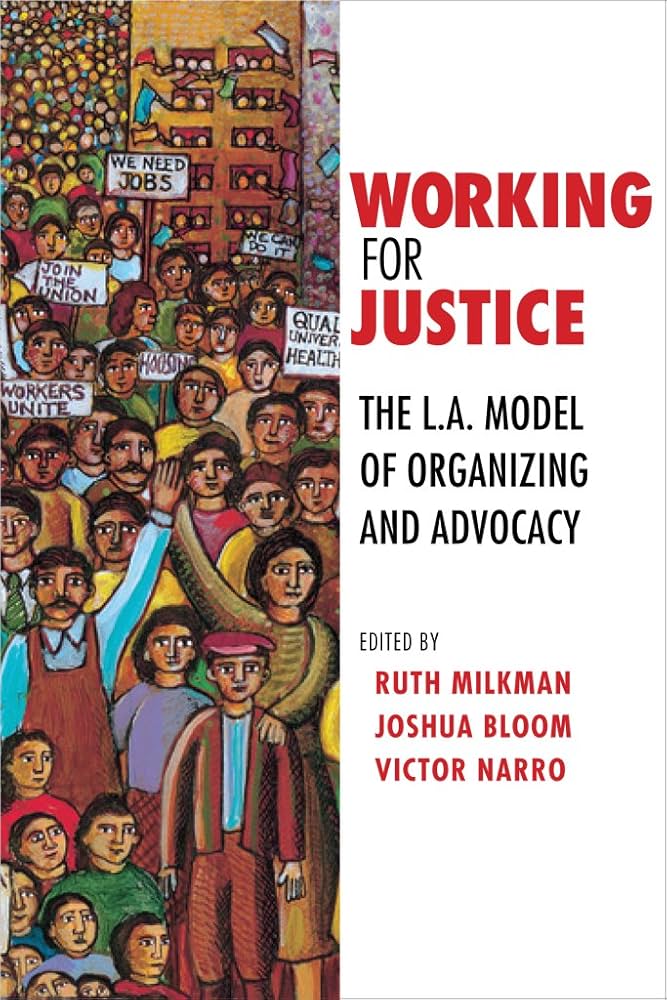
Book 3: Working for Justice The L.A. Model of Organizing and Advocacy
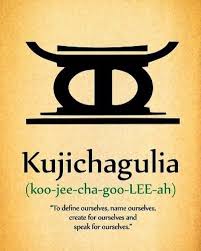
Kwanzaa Day 2: Kujichagulia (Self-Determination)
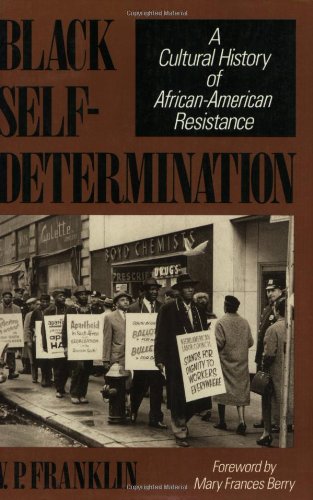
Book 1: Black Self-Determination A Cultural History of African-American Resistance by V. P. Franklin
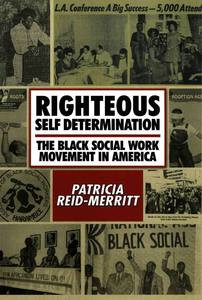
Book 2: Righteous Self Determination by Patrica Reid-Merritt
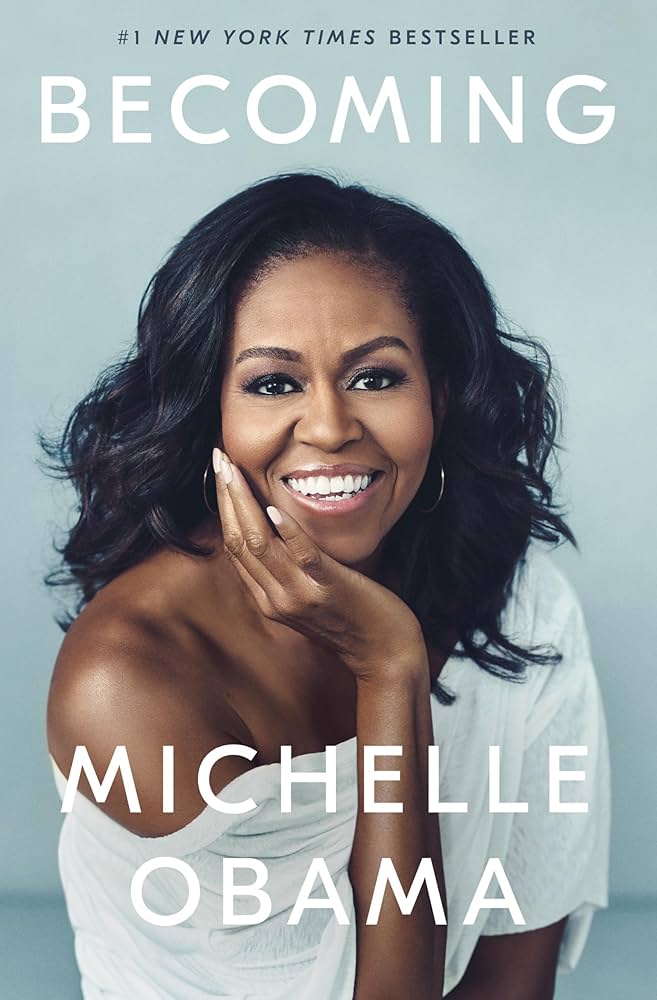
Book 3: Becoming by Former First Lady Michelle Obama
Habara Gani! What’s the News? Umoja. . .Day 1 of Kwanzaa, a cultural celebration starting December 26-January 1. A few books about Kwanzaa
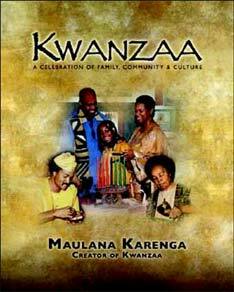
Book 1: Kwanzaa by Maulana Karenga
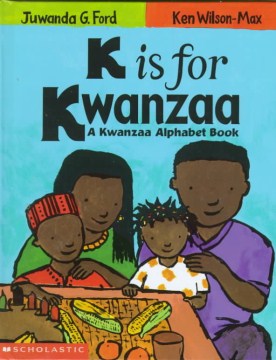
Book 2: K is for Kwanzaa by Juwanda Ford
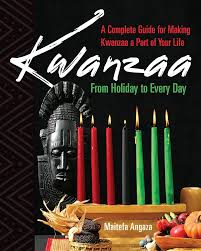
Book 3: Kwanzaa From Holiday to Every Day by Maitefa Angaza
Kwanzaa, founded by Dr. Maulana Karenga, is “a celebration of family, community and culture” from December 26 through January 1. The Nguzo Saba, also known as the Seven Principles, are featured during this time. The Seven Principles are:
Day 1: Umoja-Unity: To strive for and maintain unity in the family, community, nation and race.
Day 2: Kujichagulia-Self Determination: To define ourselves, name ourselves, create for ourselves and speak for ourselves.
Day 3: Ujima-Collective Work and Responsibility: To build and maintain our community together and make our brother’s and sister’s problems our problems and solve them together.
Day 4: Ujamaa-Cooperative Economics: To build and maintain our own stores, shops and other businesses and to profit from them together.
Day 5: Nia-Purpose: To make our collective vocation the building and developing of our community in order to restore our people to their traditional greatness.
Day 6: Kuumba-Creativity: To do always as much as we can, in the way we can, in order to leave our community more beautiful and beneficial than we inherited it.
Day 7: Imani-Faith: To believe with all our heart in our people, our parents, our teachers, our leaders and the righteousness and victory of our struggle.
As we begin a new day in a new year, let us model, apply, and practice these principles in our daily living.
More information on Kwanzaa can be found on the official Kwanzaa website
* Today in Black History – January 1 *
***********************************************************************
* The Nguzo Saba – The seven principles of Kwanzaa – Principle for *
* Day #7 – Imani (ee-MAH-nee) Faith: To believe with all our hearts *
* in our parents, our teachers, our leaders, our people and the *
* righteousness and victory of our struggle. *
***********************************************************************
1788 – The Quakers in Pennsylvania emancipate their slaves.
1804 – Haiti achieves independence from France.
1808 – The slave trade is outlawed in the United States. This stopped
the legal importation of African slaves, but did not stop
domestic trading in slaves.
1831 – William Lloyd Garrison publishes the first issue of “The
Liberator” in Boston, Massachusetts. The newspaper will become
a major influence in the movement to abolish slavery in the
United States.
1856 – Bridget “Biddy” Mason and her children are granted their freedom
by the California courts. After gaining her freedom, she will
move to Los Angeles, where she will become a major landowner and
be known for her philanthropy to the poor.
1863 – President Abraham Lincoln issues the Emancipation Proclamation,
declaring freedom for slaves living in the states that joined
the rebellion that will become known as the Civil War.
1900 – The British protectorates of Northern & Southern Nigeria are
established.
1916 – The first issue of the “Journal of Negro History” is published
with Carter G. Woodson as editor.
1956 – Sudan becomes independent.
1959 – Chad becomes an autonomous republic within the French Community.
1960 – Cameroon gains independence from France.
1962 – Rwanda is granted internal self-government by Belgium.
1964 – The Federation of Rhodesia & Nyasaland is dissolved.
1973 – The West African Economic Community is formed with Benin, Ivory
Coast, Mali, Mauritania, Niger, Senegal, and Upper Volta as
members.
1986 – Aruba becomes an independent part of Kingdom of the Netherlands.
1990 – David Dinkins is sworn in as first African American mayor of
New York City.
2005 – Shirley Chisholm, an advocate for minority rights who became the
first African American woman elected to Congress and later the
first African American to seek a major party’s nomination for
the U.S. presidency, joins the ancestors at the age of 80. The
Rev. Jesse Jackson calls her a “woman of great courage.”
Information retrieved from the Munirah Chronicle and is edited by Rene’ A. Perry.
Today in Black History – December 31 *
***********************************************************************
* The Nguzo Saba – The seven principles of Kwanzaa – Principle for *
* Day #6 – Kuumba (koo-OOM-bah) Creativity: To do always as much as *
* we can, in the way that we can, in order to leave our community *
* more beautiful than when we inherited it. *
***********************************************************************
1775 – Alarmed by the impact of the British Dunmore proclamation, that
would give freedom to slaves who would fight on their side,
Gen. George Washington reverses himself and authorizes the
enlistment of free Blacks.
1783 – The importation of African slaves is banned by all of the
northern states in the United States.
1862 – The Ebenezer African Methodist Episcopal Church holds a Watch
Night service in Suburban Maryland. It begins a tradition when
African Americans pray and worship in anticipation of the next
day, New Year’s Day 1863, when President Lincoln’s Emancipation
Proclamation is to take effect.
1871 – Annie Welthy Daughtry (later Holland) is born in Isle of Wight
County, Virginia. In 1921, she will be appointed North Carolina
Supervisor of Negro Elementary Education, a position she will
hold until she joins the ancestors. In 1927, she will found
North Carolina’s Colored Parent Teachers’ Association. She will
join the ancestors suddenly on January 6, 1934, while
addressing a county-wide meeting of Black teachers in
Louisburg, North Carolina.
1900 – Sculptor and educator Selma Burke is born in Mooresville, North
Carolina. She will be commissioned to create a profile of
President Franklin D. Roosevelt after a national competition
sponsored by the Fine Arts Commission in Washington, DC. The
completed project, a plaque, is unveiled and installed at the
Record of Deeds Building in Washington DC. She will join the
ancestors on August 29, 1995.
1930 – Odetta Felious Gordon Holmes is born in Birmingham, Alabama.
She will become a famous folksinger, known simply as “Odetta”,
who will sing all over the world and at major peace and civil
rights meetings, including the 1963 March on Washington. Among
the many musicians who cite Odetta as a major musical influence
have been Janis Joplin, Bob Dylan and Joan Baez. She will join
the ancestors on December 2, 2008.
1948 – LaDonna Adrian Gaines is born in Boston, Massachusetts. She will
be best known by her stage name, Donna Summer. She will become
a singer and songwriter, gaining prominence during the disco era
of the late 1970s. A five-time Grammy Award winner, she will be
the first artist to have three consecutive double albums reach #1
on the United States Billboard album chart and chart four number
one singles in the United States within a 13-month period. She will
reportedly sell over 100 million records, making her one of the
world’s best-selling artists of all time. She will first become
involved with singing through church choir groups before joining a
number of bands influenced by the Motown Sound. Also influenced by
the counterculture of the 1960s, she will become the front singer
of a psychedelic rock band named Crow and move to New York City.
Joining a touring version of the musical “Hair,” she will leave New
York and spend several years living, acting, and singing in West
Germany, where she will meet music producer Giorgio Moroder. Also
while in Europe, she will marry Helmut Sommer. After their divorce,
she will keep his surname for her stage name; dropping the “o” and
replacing it with a “u” for “Summer”. After returning to the United
States, she will co-write the song “Love to Love You Baby” with Pete
Bellotte. The song will be released in 1975 to mass commercial
success. Over the following years She will follow this success with
a string of other hits, such as “I Feel Love”, “Last Dance”,
“MacArthur Park”, “Hot Stuff”, “Bad Girls”, “Dim All the Lights”,
“No More Tears (Enough Is Enough)”, and “On the Radio”. She will
become known as the “Queen of Disco” and regularly appear at the
Studio 54 nightclub in New York City, while her music gains a global
following. She will continue to perform until 2011. She will join
the ancestors on May 17,2912 in Naples, Florida, after succumbing to
lung cancer at the age of 63. On December 11, 2012, after four prior
nominations, she will be posthumously announced to be one of the 2013
inductees to the Rock and Roll Hall of Fame,and will be inducted on
April 18, 2013, at Los Angeles’ Nokia Theater.
1953 – Hulan Jack is inaugurated as Manhattan borough president, the
first African American to hold the post.
1953 – The NAACP’s Spingarn Medal is presented to Paul R. Williams for
his achievements as an architect.
1962 – Katanga becomes part of the Democratic Republic of the Congo.
1964 – In a speech before a group of young people, Malcolm X urges them
“to see for yourself and listen for yourself and think for
yourself. This generation, especially of our people, have a
burden, more so than at any other time in history. The most
important thing we can learn to do today is think for
ourselves.”
1972 – Roberto Clemente, Pittsburgh Pirate slugger, joins the ancestors
after a plane crash on his way to a humanitarian mission to
Nicaragua.
1976 – Roland Hayes joins the ancestors in Boston, Massachusetts at the
age of 89. He had been an acclaimed tenor whose pioneering
recitals of German lieder and other classical music opened the
concert stage for African American singers
1984 – The first nationally broadcast telethon for the United Negro
College Fund raises $14.1 million. The telethon will become an
annual fundraising drive that will support more than 40
historically African American institutions of higher learning
and draw widespread individual and corporate support.
Information retrieved from the Munirah Chronicle and is edited by Rene’ A. Perry.
 The CamaraIfe Maktaba